-
Trusscore isn't cheaper than drywall. Stop asking that question.
-
Why the upfront math almost always favors drywall
-
Where the numbers actually shift
-
The specification problem nobody warns you about
-
Where the "all-in-one supplier" pitch falls apart
-
The objection I always hear — and my response
-
So — is Trusscore cheaper than drywall?
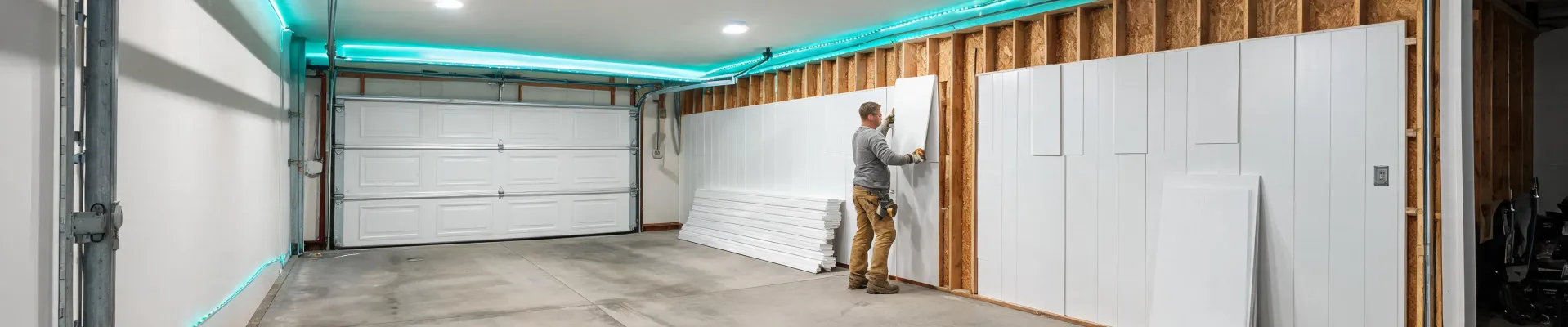
Trusscore isn't cheaper than drywall. Stop asking that question.
I'm a procurement manager at a 140-person commercial construction company. I've managed our materials budget (about $2.3M annually) for 6 years, negotiated with 30+ vendors, and logged every order in our cost tracking system since 2019. When I audited our 2023 spending, wall systems were our third-largest line item.
Here's my position, stated upfront: If you're comparing Trusscore to drywall on a pure cost-per-square-foot basis, drywall wins almost every time. If you're comparing total cost of ownership across a 10-year commercial lifecycle, that answer flips more often than people admit.
The question "is Trusscore cheaper than drywall" is the wrong question. The right question is: cheaper when, where, and at what lifecycle stage?
Why the upfront math almost always favors drywall
Let me be specific, because vague pricing claims are useless. Based on quotes I collected in Q4 2024 from three regional drywall contractors and two Trusscore distributors:
- Standard drywall (1/2" gypsum, taped and finished): $2.10–$3.40 per sq ft installed, depending on finish level (Level 3 vs Level 5)
- Trusscore PVC wall panels: $4.50–$7.20 per sq ft installed, depending on panel profile and trim requirements
So on day one, Trusscore runs roughly 80–140% more than painted drywall. That gap doesn't close with volume discounts either — I pushed for pricing at 40,000 sq ft and the best distributor quote still landed at $4.15/sq ft.
If your project is a leased space with a 3-year horizon, drywall is the rational choice. Full stop. I don't care how good the panels look in the showroom.
Where the numbers actually shift
Here's the part most cost comparisons skip: drywall isn't a one-time cost. It's a maintenance subscription.
We tracked repairs across 18 commercial buildings from 2020–2024. Drywall damage — from carts, plumbing leaks, tenant modifications, and door swings — averaged $1,850 per 10,000 sq ft per year in patching, priming, and repainting. Some years were worse. In 2022, a single water event in one of our warehouse-adjacent offices cost $11,200 in drywall replacement.
Trusscore panels, in the same facilities, averaged $340 per 10,000 sq ft annually over the same period. That's mostly cleaning and the occasional panel swap.
Run that forward 10 years on a 25,000 sq ft commercial interior:
- Drywall: $21,000–$34,000 upfront + roughly $46,000 in cumulative maintenance = $67,000–$80,000
- Trusscore: $103,000–$180,000 upfront + roughly $8,500 in maintenance = $111,000–$188,000
So no — Trusscore doesn't magically become cheaper. But the gap compresses from "impossible" to "depends on your building's use case." In high-traffic corridors, food processing areas, or anywhere wet, Trusscore pulls ahead around year 4–6. In a quiet office suite with careful tenants, drywall stays ahead for 15+ years.
The specification problem nobody warns you about
I want to flag something that burned us. When we spec'd our first Trusscore install (a 6,200 sq ft wash-down area in 2022), I said "standard panel and standard trim." The distributor heard "standard." We both meant different things.
I meant their most common profile. They meant whatever their warehouse had in stock that month. Result: two panel profiles that didn't share trim sizes, and a $3,400 change order to swap accessories after the first shipment arrived.
Now I require a written spec sheet with panel profile numbers, trim SKUs, and accessory part numbers before any order goes out. If a supplier can't produce that document, that's a signal about how they run their business.
This matters because Trusscore wall panels aren't a single product. The system includes panels in different thicknesses and profiles, matching trim, corner pieces, and accessories. If your spec doesn't pin down each component, you'll pay for the gap.
Where the "all-in-one supplier" pitch falls apart
I've sat through a lot of pitches from building material suppliers who claim they can handle everything — panels, acoustic solutions, commercial wallpaper, private label runs. And I'll say this: the ones who claim to do everything usually do one thing well and subcontract the rest.
When we needed acoustic wall panels for a client's conference wing, our panel supplier said "we can source those too." What they actually meant was they'd mark up a third-party acoustic panel by 22% and add 3 weeks of lead time. When we needed commercial wallpaper for a retail rollout, same story.
The supplier who told me flat out "acoustic panels aren't our strength — here's a specialist we trust" earned my trust for everything else they did. That's the tell. A supplier who knows where their expertise ends is a supplier who won't overpromise on a $200,000 order.
If you're evaluating Trusscore panels for a project that also needs acoustic treatment, private-label solutions, or commercial wallcoverings — get those quotes separately. Bundling rarely saves money. It just hides margins.
The objection I always hear — and my response
"But PVC panels look cheap."
Fair. In 2019, I would have agreed. The early PVC wall systems I saw looked like gas station bathroom cladding. The current generation — particularly in commercial and healthcare applications — is a different product category. The surface finish options have improved, and the seam detail on properly installed Trusscore systems reads as intentional rather than improvised.
Would I put it in a Class A office lobby? No. Would I put it in a hospital corridor, a commercial kitchen, or a warehouse office where the drywall gets destroyed every 18 months? Every time.
The most frustrating part of materials procurement is watching the same cycle repeat: spec drywall because it's cheaper, patch drywall for 6 years, then replace it in year 7 at a cost that exceeds the Trusscore upgrade would have been. You'd think facilities teams would track this pattern. Most don't, because repair budgets and install budgets live in different columns.
That's the accounting trap. Upfront cost gets scrutinized. Lifetime cost gets ignored.
So — is Trusscore cheaper than drywall?
No. Not at install. Not on day one. Anyone selling you that story is either misinformed or hoping you won't do the math.
But cheaper isn't the same as lower total cost. And total cost depends entirely on your specification, your building's traffic, your maintenance reality, and how long you'll actually own the space.
My rule after 6 years of tracking this: if the surface will see water, carts, or chemical wash-down — spec Trusscore and stop pretending drywall is the budget option. If it's a quiet interior with stable tenants — spec drywall and put the savings into something that matters.
And whatever you decide, get the spec sheet in writing. That $3,400 change order taught me more about Trusscore than any brochure did.
Pricing referenced from Q4 2024 regional quotes (US Midwest, commercial interiors, 15,000–40,000 sq ft scope). Actual pricing varies by region, volume, and specification. Verify current panel and trim pricing directly with authorized Trusscore distributors before budgeting.