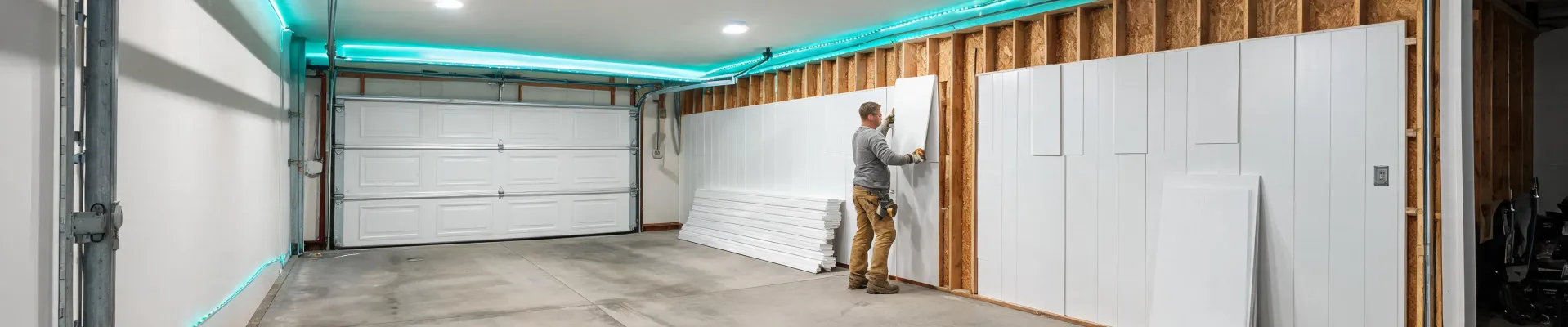
The 11 p.m. call that changed how I read panel specs
In March 2024, a contractor called me at 11 p.m. on a Thursday. Retail buildout, soft opening Monday, 1,200 square feet of PVC wall panels to hang. Normal lead time on that volume: two to three weeks. He had 60 hours.
We pulled it off—found a vendor with stock, paid $2,400 in rush freight on top of the base order, delivered Saturday morning. That's not the story.
The story is why he was calling me at 11 p.m. instead of ordering two weeks earlier. He had ordered two weeks earlier, from a wholesale supplier, off a spec sheet that said everything he needed to hear: paintable finish, consistent thickness, compatible trim. The order arrived. The panels didn't match what he'd pictured. (Should mention: the second batch we sent was a different dye lot than the first. He blended them and you could barely tell—but he knew.)
Nothing on that spec sheet was technically false. That's the part that took me a while to understand.
What a spec sheet actually is
I've coordinated rush orders in building materials for going on nine years—panels, trim, siding, the unglamorous stuff that holds a project together. In that time I've worked maybe 300+ jobs where somebody was trying to fix a panel problem on a deadline. The pattern barely changes, and it almost never starts with a bad product. It starts with a buyer reading a spec sheet like it's a contract.
It isn't. A wall panel specification sheet describes a product under controlled conditions, written in the language that protects the seller. "Paintable" doesn't mean "paint behaves like it does on drywall." "Consistent thickness" doesn't mean "±0.002 inches across a 40-foot run." "Trim compatible" doesn't tell you which trim, off whose extrusion die, from which run.
What I mean is that a spec sheet answers the question the seller wants to answer—is this product within category X—and not the question you actually have, which is will it do what my project needs it to do. Those look identical on paper. They're not remotely the same question.
The OEM and wholesale trap nobody warns you about
Here's the part that really gets people: sourcing decorative wall panels OEM or wholesale feels like it solves this. Go direct to a manufacturer, get a spec sheet, cut out the middleman. Clean.
Except OEM isn't a guarantee of consistency—it's a description of a relationship. Two factories can both produce "OEM PVC wall panels" that clear the same general spec and still behave differently in your hands: different PVC compound, different surface treatment, different tolerance hiding behind the identical printed number. A spec sheet is the lowest common denominator, not the ceiling.
So when a buyer compares two quotes on spec sheets and picks the lower one, they aren't comparing products. They're comparing how two sellers chose to describe products. That's a red flag—not an automatic deal-breaker, but it's the thing that explains why the "same" panels from two suppliers feel nothing alike once they're on the wall.
What the wrong panel actually costs you
Let me put numbers on this, because "it costs more" is too easy to shrug off.
The contractor from March: original order, around $9,400. The problem wasn't that the panels were unusable. It's that the finish needed more prep than he'd planned for, which ate an extra crew day, which compressed his install window, which put him on the phone with me Friday night for a partial reorder to blend the two batches. Total extra cost by Monday's opening: a ballpark of $4,800—rush freight, overtime labor, and one section he just quietly lived with.
That's roughly a 50% swing on the original order, driven entirely by a spec sheet he trusted to tell him everything.
Why does this matter legally? There's an FTC angle worth knowing. Per FTC advertising guidelines (ftc.gov), product claims have to be truthful, substantiated, and not misleading. That protects you from outright lies. It does not protect you from a spec sheet that's technically true and practically useless. That gap is yours to manage, not the regulator's.
What to ask instead
The vendors I trust now are the ones who tell me what they don't do well. Sounds like a small thing. It's the whole thing. A supplier who says "this panel's great for back-of-house, but if you're doing a front-of-house retail run, talk to someone who specializes in that finish" just told me more about their product than any spec sheet could.
Which is why the honest answer to a question I get constantly—can you paint Trusscore wall panels—isn't a simple yes. It's that the paint is the easy part and the prep is the job, and if your supplier won't talk about the prep, ask yourself why. Check the manufacturer's current guidance, then ask them the prep question anyway. The answer tells you who you're dealing with.
When I'm triaging a rush order, these are the questions that actually predict whether I'll be back on the phone at 11 p.m.:
- Which sample did you see? Not "do you have samples"—which specific sample, from which run. If they can't answer, that's your answer.
- What does the trim actually come off? Not "is it compatible"—which die, which profile, which batch.
- What's the reorder lead time, not the first-order lead time? First orders get prioritized. Reorders reveal the real relationship.
- What won't you do? If everything's a yes, nothing is a commitment.
Had two hours to make a panel call myself last fall. Normally I'd run samples against three suppliers. There was no time. I went with the one I knew would tell me no if the product was wrong for the application—not because its spec sheet was better, but because I'd learned to trust the boundary over the brochure.
Bottom line
Panel specifications matter. Read them. Just understand what they are: a floor, not a ceiling. A description of a category, not a prediction of your project.
The buyers who stop getting surprised are the ones who stop asking suppliers to prove they can do everything and start asking what they'll admit they can't. That's a strange way to choose a decorative wall panel supplier. It's also the only one that's held up for me.
The best part of a rush order that goes right isn't the speed. It's the moment you realize you won't have to explain a delay to anyone. Worth more than the savings on the cheap quote—though I might be misremembering exactly how close that March math was. It was close.