-
The 30-Second Answer
-
Why You Should Weigh My Opinion (Or At Least Skim the Checklist)
-
What Are Trusscore Wall Panels, Exactly?
-
Commercial Wallpaper Specifications vs. Panel Specs
-
Wall Panels Private Label: What Actually Changes
-
What to Look for in a Wall Panels Supplier
-
On Price, Briefly
-
Where This Advice Breaks Down
The 30-Second Answer
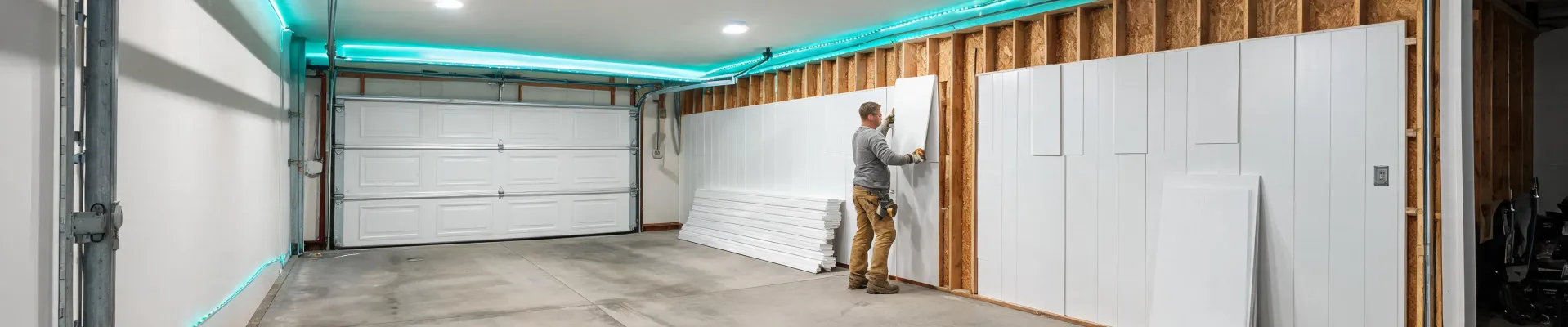
Trusscore wall panels are interlocking PVC wall and ceiling panels — a direct alternative to drywall, FRP, and tile in commercial and agricultural builds. They install with basic tools, they don't need painting or grout, and they're specified by the square foot. If you're sourcing Trusscore panels or a private-label equivalent, the single decision that will cost you the most money is not the per-panel price. It's whether your supplier can hold spec on the batch you actually receive.
That's the whole thesis. The rest of this is how I got there, what "commercial wallpaper specifications" actually means when you're comparing surface finishes, and the checklist I run before I sign a purchase order. I'll flag where my experience stops being useful, because it does.
Why You Should Weigh My Opinion (Or At Least Skim the Checklist)
I coordinate emergency orders for a building products distributor. In March 2024 (a Thursday, if you want the detail), a client called 36 hours before a job-site walkthrough needing 4,200 square feet of PVC wall panel delivered to a food-processing build. Normal turnaround was 10 business days. We found a manufacturer with stock, paid $3,100 extra in freight on top of the $28,000 base order, and made the walkthrough. The client's alternative was pushing their opening date back three weeks — and their lease carried a $50,000 liquidated-damages clause tied to that open date.
I've handled rush orders ranging from $500 pallet jobs to $15,000 multi-truckloads. I'm not a spec writer. I'm the person who cleans up when a spec gets missed. So take this from the receiving dock end, not the drafting table.
What Are Trusscore Wall Panels, Exactly?
Trusscore is a brand of PVC wall and ceiling panel. The panels are rigid, interlocking (tongue-and-groove or a similar joint depending on the line), and install vertically or horizontally over existing substrates or framing. Core is PVC; the finish is matte or semi-gloss. Trim and transition pieces do the finishing work.
Where they sit against the alternatives:
- Against drywall: faster install, no taping, no mudding, no painting, no dust. Trade-off is up-front material cost per square foot and less substrate flexibility.
- Against FRP: more rigid, cleaner seams, no exposed fasteners on many systems. FRP is usually cheaper on large flat runs, but it eats the savings back in adhesive and accessories.
- Against tile: no grout lines to seal, no cracked-tile callbacks. Not a replacement for high-heat, high-chemical, or specialty substrate applications.
The reason "what is Trusscore wall panels" is a hard question to answer in one line is that buyers keep comparing it to three categories at once. It's not wallcovering, it's not tile, and it's not drywall. It's a panel system, and panel systems live or die on their accessories.
Commercial Wallpaper Specifications vs. Panel Specs
Here's where I see the most confusion, and it's a causation reversal worth understanding. Buyers ask for commercial wallpaper specifications, then get quoted a panel system, then try to compare the two line by line. That's the wrong comparison — not because one is better, but because they're built to different assumptions.
Commercial wallpaper specs are written around Type I / Type II vinyl wallcovering classifications, scrub ratings (usually ASTM D2486), pattern repeat, and adhesion under humidity. Panel specs are written around thickness, impact resistance, flame-spread classification (ASTM E84 is the common US reference), and the accessory trim system.
People think the material price drives the project cost. Actually, the material price is the small number. Labor, submittals, and callbacks are the big ones. A panel that saves 20 cents a square foot but burns two extra days of trim work is the more expensive option by the time you close the job.
Wall Panels Private Label: What Actually Changes
A private-label wall panel is a manufacturer producing panels to your brand, your packaging, and — the part people skip — your tolerances. The extrusion is often identical to their house brand. What changes is:
- Ink, packaging, and your logo on the submittal sheets
- Order minimums (often a container, or a set square-footage band)
- Lead times, usually longer because your run gets scheduled
- Who owns the warranty relationship with the end specifier
From experience: the failure mode with private label wall panels isn't the panel. It's the documentation. We lost a $40,000 private-label program in 2023 — the spec sheets we issued didn't match the flame-spread classification on the actual test report. Material was fine. Paperwork wasn't. That's when we started requiring the test report, not the spec sheet, before any submittal goes out. Sounds obvious. Wasn't, until it cost us.
What to Look for in a Wall Panels Supplier
Here's my working checklist. It's not exhaustive — an engineer would add a dozen line items — but it's what I actually run when I'm triaging a time-critical order.
- Accessory continuity. A supplier who stocks panels but won't commit to trim, inside/outside corners, and transitions through the full production run is a red flag. Panels without accessories are expensive shelving.
- Batch consistency. Ask for the production date on the lot you're quoting. If they can't give you one, you're quoting a hypothetical.
- Test reports, not spec sheets. Per FTC advertising guidance (ftc.gov), performance claims have to be truthful and substantiated. Ask for the actual test report and verify the model number on the report matches the product on the quote.
- Freight and lead time in writing. "3-5 days" from a phone call means nothing. Get it on the order acknowledgement.
- Who answers the phone at 6 p.m. Before I place a rush order, I call the supplier's line after hours to see if it rings to a human. It's basically free to test, and it's saved me from two bad vendors.
That last one matters more than it sounds. A supplier that can't staff an after-hours line usually can't staff a problem either.
On Price, Briefly
I get asked to hit a target number on almost every RFQ, so let me be direct: the lowest quote has cost us more in a meaningful chunk of cases — I'd put it north of half. Not because the vendor was malicious, but because the cheap number almost always lives on top of a thrown-together lead time, a thinner accessory package, or a batch nobody tracked. That $200-per-pallet savings turns into a $1,500 reshipment when the corners don't match the panels.
Total cost, not unit price. It sounds like a cliché until you've eaten a callback.
Where This Advice Breaks Down
This approach worked for us, but we're a mid-size distributor with fairly predictable ordering patterns and a customer base that mostly specs PVC panel. If you're a one-time buyer, or you're specifying a material you haven't handled before (circa 2025, at least), the calculus shifts. A lead time you can absorb on a 40-foot container is a lead time you can't absorb on a pickup-truck order.
I can only really speak to domestic PVC panel sourcing. If you're importing, the equation tilts toward inspection costs, duty timing, and container utilization, and there are factors there I don't touch daily.
One more boundary: I'm not qualified to tell you which flame-spread class or impact rating your specific job requires. That's a specifier's call, and it depends on your authority having jurisdiction. What I can tell you is that if a supplier can't produce the report behind their claim when you ask for it, the claim is worth roughly what you paid for it. (Should mention: ask before you sign, not after.)