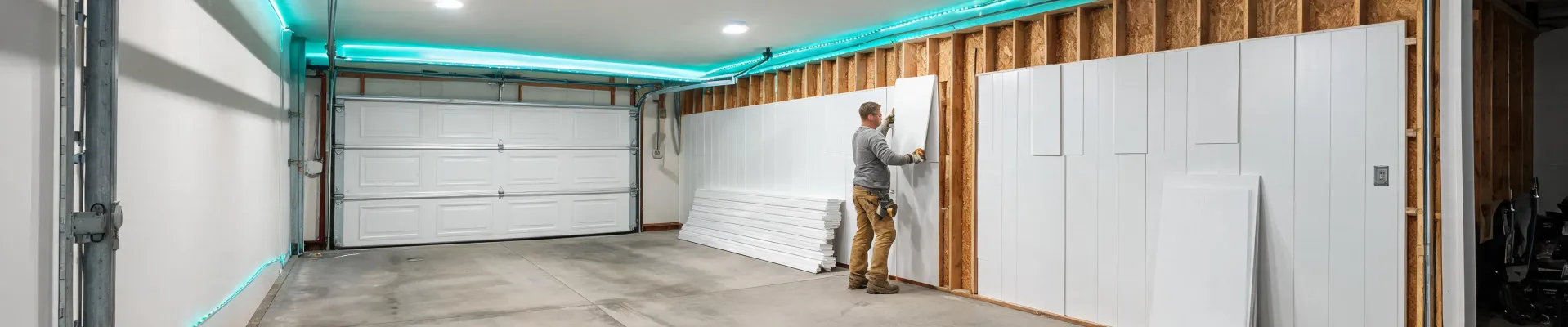
Everyone Starts With the Same Question
"What's the cost per square foot?"
I've been managing procurement for our facilities team since 2020. Roughly 60 vendor relationships a year. Office retrofits, tenant improvements, the occasional rush job for a lease deadline. And every single time we scope a wall and ceiling project, the first number that hits my inbox is a per-square-foot figure.
Guess what? That number tells you almost nothing.
I learned this the expensive way. In 2022, we approved a bid that came in about 22% under the next closest quote for a commercial office refresh. Looked like a win. My VP even sent a "nice work" email.
Three months later I was explaining to the same VP why we needed a supplemental budget request. Not a fun conversation.
The Surface Problem Nobody Questions
When you're sourcing wall panels — whether it's PVC systems like Trusscore panels, acoustic wall panels, or traditional finishes — the comparison spreadsheet almost always looks the same:
- Vendor A: $X per sq ft
- Vendor B: $Y per sq ft
- Vendor C: $Z per sq ft
Pick the lowest. Move on. Right?
Here's what most people don't realize: the per-square-foot number is a marketing instrument, not a budgeting tool. Vendors know you're going to multiply it by your square footage and compare. So some of them engineer the number to win that comparison.
What they don't include in that number is where the real money lives.
The Deeper Problem: What's Actually Driving Your Cost
After getting burned twice — once on a budget overrun, once on a compliance rejection — I started reverse-engineering every quote. I asked vendors to break down the same five line items across the board. Suddenly the pricing picture looked completely different.
1. Trim and Accessories
Wall panels don't install themselves. You need trim, edge profiles, corner pieces, transition strips. On a Trusscore wall and ceiling system, trim is what makes the whole installation look finished — and it's typically quoted separately.
One vendor's $2.40/sq ft "panel cost" quietly became $3.15 once we added the required trim kit. The competitor who quoted $2.85 all-in was actually cheaper. Nobody told me that upfront.
What most people don't realize is that the panel is often the cheapest part of a wall system. The accessories are where the margin lives.
2. Acoustic Wall Panel Specifications (or the Lack of Them)
If your space has open offices, conference rooms, or anything with hard surfaces, acoustic performance matters. But "acoustic" is not a specification — it's a category.
You need an NRC (Noise Reduction Coefficient) rating. You need to know if the product carries an STC (Sound Transmission Class) value. If a vendor can't hand you a test report with a specific number, they're selling you a texture, not a spec.
We once specified "acoustic wall panels" without pinning down the NRC. The panels installed fine. The reverb in the conference room was so bad that meetings got moved to a smaller room. We ended up adding surface-mounted absorbers at $4,800 we hadn't budgeted.
That's the cost of a vague specification.
3. Commercial Wallpaper Compliance Requirements
This one caught me off guard because we weren't even doing wallpaper. We were doing a modern wall panel system. But the fire code doesn't care what you call it.
Commercial interiors in most US jurisdictions require wall finishes to meet Class A flame spread ratings under ASTM E84. If you're in an egress corridor, near a kitchen, or in a healthcare setting, the requirements tighten further. Commercial wallpaper compliance requirements exist because those finishes have historically been a fire risk — and the rules apply to panels, vinyl, paint, and yes, wallpaper.
I've watched a project get red-tagged during final inspection because the installation team used a decorative trim kit that wasn't rated for the assembly. The panels were fine. The trim wasn't. Cost of re-work: three days of labor plus the replacement material.
Here's something vendors won't tell you: not all PVC wall panel products carry the same fire ratings, even when they look identical. Ask for the paperwork before you sign the PO. Not after.
What It Costs When You Don't Ask These Questions
Let me put real numbers on the table. Not hypotheticals — actual line items from projects I've managed.
- Trim surprise: +$2,100 on a 1,200 sq ft install (budgeted panel cost only)
- Acoustic fix: +$4,800 in added absorbers after move-in
- Compliance re-work: +$6,400 in labor and material after a failed inspection
- Rush reorder: +$3,200 when the original supplier's lead time slipped two weeks past our milestone
Add those up and the "cheapest" quote wasn't cheap at all. It was just the one with the most invisible costs.
The hidden cost of getting this wrong isn't just money. It's the credibility you spend with your operations team, your finance department, and the executives who have to sign off on a supplemental. I've been on that side of the table. It's not a place you want to be twice.
Small Orders Get Treated Like They Don't Matter — That's a Mistake
One more thing that doesn't get said enough in procurement circles.
When I placed a $600 pilot order to test a Trusscore panel install in a single conference room, two vendors wouldn't even return my email. Minimum order quantities, they said. Not worth the setup.
The vendor who did take that $600 order is the one who now handles $18,000 in annual panel purchases across three buildings. Small doesn't mean unimportant — it means unproven potential. And the suppliers who understand that get the long-term relationship.
I get it. Small orders are less efficient. But here's the thing — every large account was once a small one. If you can't handle a trial run, you probably won't handle the pressure when the stakes are real.
The Solution Is Boring, But It Works
After five years of this, here's the framework I actually use:
- Request an all-in quote. Panel, trim, accessories, freight, and install labor — one document. Any vendor who won't provide it isn't ready for commercial work.
- Ask for specification sheets with test numbers. NRC, STC, ASTM E84 flame spread, VOC content if you're in a green building. If they don't have it, that's your answer.
- Verify compliance against your actual jurisdiction. Not the vendor's "it's fine" — your local code official. This is a five-minute phone call that has saved me two inspections.
- Buy a small trial order. A single room. See how they handle communication, delivery, and support before you commit to the whole floor.
- Compare total installed cost, not unit price. The number you budget against should include everything. If it doesn't, you're not comparing — you're guessing.
That's it. Not glamorous. Not complicated. Just the difference between a project that closes clean and one that follows you into the next fiscal quarter.
The wall panel industry isn't trying to fool you. But the way products get marketed — per-square-foot pricing, vague "acoustic" claims, unbundled accessories — makes it easy to compare the wrong things.
Compare the right things. Ask for the spec sheets. Get the all-in number. And don't assume the cheapest quote is coming from the cheapest project.
It almost never is.