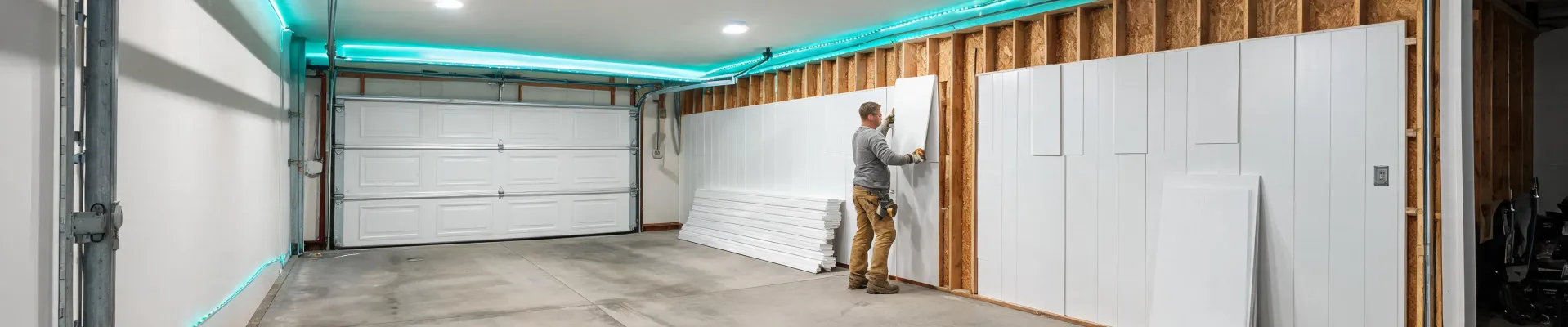
The Short Answer
Where to buy Trusscore wall panels: through Trusscore's authorized dealer network, through regional building-material wholesalers, or bundled into a contractor's quote. Those are your three realistic options. Skip the random reseller listings on general marketplaces—the 5-10% you think you're saving usually disappears the moment delivery slips or the batch color doesn't match.
If you're evaluating any commercial wall covering manufacturer—Trusscore, a PVC wall panel wholesale supplier, or even a wallpaper manufacturer for an office refresh—the filter is the same. Verify these five things before you sign anything: a tested spec sheet, an MOQ that matches your real need, invoicing that finance won't kick back, a written delivery date, and a warranty that names a claims process.
That's the answer. The rest of this is why.
Why I Care About This
I'm an office administrator for a 240-person company. I took over purchasing in 2020, which means I've been managing vendor relationships through a pandemic, a supply-chain mess, and three office build-outs since. I process somewhere between 70 and 90 orders a year across about a dozen vendors—wall coverings, signage, furniture, the whole catalog of "make this office look professional" stuff.
I report to both operations and finance. Honestly, finance is the harder boss. I've had expense reports rejected for bad invoicing. I've been on the receiving end of a VP's "so what happened with the panels?" email. Twice.
How to Actually Buy Trusscore Panels
Option 1: Authorized Dealers
This is the safest path. Authorized dealers know the product line, can pull the current spec sheet within an hour, and usually stock a reasonable range of trim and accessories. The trade-off: you're paying a bit more than a wholesale-only channel, and lead times depend on their own inventory.
If you're specifying Trusscore products for a commercial build, ask the dealer for the current listing documentation and installation guide. Not the marketing PDF. The technical one. If they can't produce it quickly, that tells you something.
Option 2: Regional Wholesalers
Wholesale can save 10-20% on volume, but "wholesale" is not a synonym for "fast." A wholesaler might have your panels in three weeks. Or they might have them in six. If your build has a fire-rated inspection, an occupancy date, or a client walkthrough on the calendar, that gap matters more than the discount.
Here's a rough sense of what I've seen in 2024 Q3 dealer comparisons for non-spec PVC wall panels: about $2.40 to $4.80 per square foot, before installation. The spread, in my experience, is mostly driven by lead time and batch consistency—not the panel itself. Verify current pricing with your own dealers; it moves.
Option 3: Bundled With Your Contractor
If you've got a GC or a specialist installing PVC wall panels, let them quote the material. Takes some markup out of your life and keeps one throat to choke when something shows up damaged. The trade-off is transparency—you won't always see what you're paying per panel versus per accessory versus labor.
Ask for a line-item quote. If they push back, they're not the contractor for a job where you also have to answer to finance.
My 5-Point Evaluation Checklist
This is what I built after getting burned. I'm not exaggerating—literally twice in 2022 alone.
- Tested spec sheet, with standards named. Fire rating, VOC, impact resistance—whatever your space actually requires. If the "data" is on a marketing page and not a technical document, that's not a spec. It's a promise.
- MOQ that matches reality. Plenty of wholesale PVC wall panel suppliers set MOQs designed for developments, not for a three-room office refresh. Never order extra just to hit an MOQ. See the story below.
- Invoice capability. Before I place a first order with any vendor, I ask for a sample invoice. Sounds dumb. It isn't. You'd be surprised how many "budget" suppliers can't produce a compliant invoice with PO numbers, tax IDs, and net terms.
- Delivery date in writing. Email, PDF, PO acknowledgment—something dated and signed. Verbal promises are what got me in trouble.
- Warranty and claims process. Ask them: "If a pallet arrives with color variation, what happens next?" If the answer is vague, walk. A warranty is only as good as the process behind it.
The $1,400 Mistake I'd Rather Not Repeat
In 2023, we needed to refresh three conference rooms. Trusscore panels had the cleanest spec sheet on the shortlist, but the authorized dealer was quoting about 15% more than a wholesale listing I found on a general marketplace.
I went back and forth for a week and a half. Dealer offered certainty. Wholesaler offered savings. On paper, the savings made sense. But my gut kept saying the deadline mattered more.
I picked savings.
The panels arrived in phases over four weeks instead of the promised eleven days. Two of the pallets came with the wrong batch of trim. And the invoice? Handwritten, no tax ID, and the vendor wanted payment via wire transfer to an account they "forgot" to put in the LLC name.
Finance rejected the expense. My manager spent a day sorting it out. We ended up re-buying the trim from the dealer anyway, at short-notice pricing. Net loss: roughly $1,400 on a project that was supposed to save us $600.
That's when I stopped optimizing for unit price and started optimizing for delivery certainty.
Where Delivery Certainty Actually Pays
Here's the thing nobody tells you when you take over purchasing: material cost is a line item. Missing a deadline is a career event. If a client walks into a half-finished office, the $600 you saved doesn't matter anymore.
For anything with a fixed date attached—occupancy inspections, client tours, board meetings, a lease commencement—I'll pay a premium for a written delivery commitment. 10-15% more, if we're being honest. Sometimes more than that. I've paid it, and I'd do it again.
That's not "spend whatever." It's "decide which project is critical and let the rest go for cheaper."
When the Cheap Option Is Actually Fine
I still buy cheaper for storage rooms, back-of-house corridors, and anything that won't be photographed or inspected. No sense paying a premium for a wall nobody looks at.
And honestly? For a lot of "decorative wall panels" projects, wallpaper or paint is still the right call. PVC panels shine in humid, high-traffic, or hard-to-clean spaces—corridors, kitchens, bathrooms, healthcare, food service. If you're just trying to make an open-plan office less beige, you don't need a commercial wall panel vendor. You need a decent wallpaper manufacturer and a good installer.
If you're evaluating commercial wallpaper manufacturers for a light-duty project like that, flip the checklist: swatch book, batch consistency guarantee, a sample roll on the actual wall, and a rep who'll answer you on Friday afternoon. That last one is underrated. Try it. You'll learn a lot about a vendor in a single email.
One More Boundary
None of this applies cleanly if you're building out a healthcare, education, or food processing facility. Those spaces carry compliance requirements—fire ratings, cleanability, chemical resistance—that change what "best value" means entirely. Get the spec from the facility stakeholders first, then go shopping. Not the other way around.
And if you're specifying Trusscore panels for that kind of project, get the current documentation directly from Trusscore or an authorized dealer. Don't rely on a distributor's summary. Ever.
Prices and lead times referenced above are from my own 2023-2024 purchasing records; verify current rates with your dealers before you commit.