I Thought This Would Be Simple
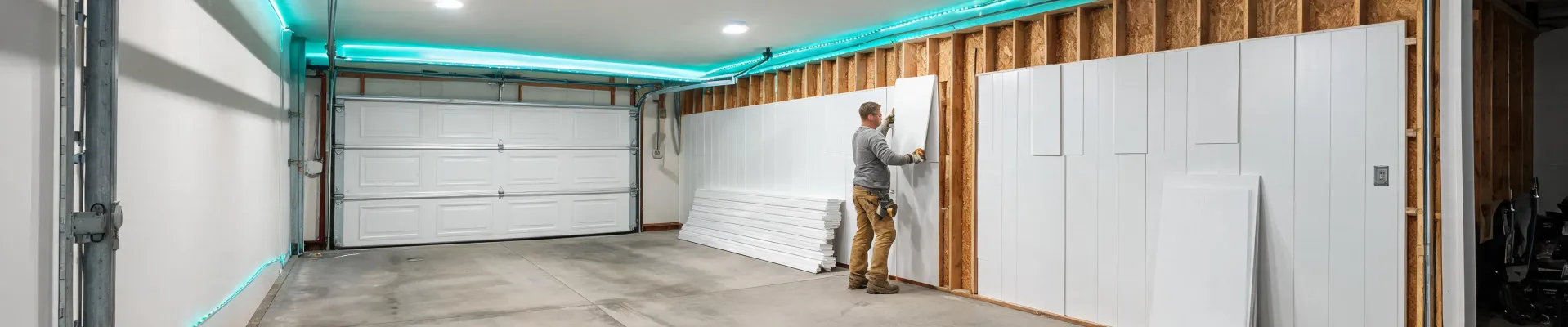
In 2021, we needed to renovate the interior walls of a 12,000 sq ft warehouse. I collected three quotes for PVC wall panels. The price difference was less than 7 cents per square foot. The spec sheets all said 5mm thickness, standard dimensions, white matte finish.
I picked the middle one.
Three months later, we'd spent an extra $4,800 on mismatched trim accessories and additional labor. The panels themselves were fine. The problem was everything the spec sheet didn't mention.
Since then, I've handled roughly 14 facility renovation projects and procured over 40,000 square feet of PVC wall panels. Not a huge sample, but enough to learn some lessons worth sharing.
Why Spec Sheets Always Look the Same
Most PVC wall panels specification guides you'll receive cover the same basic fields: thickness, width, length, surface finish, color, fire rating. That seems like enough to make a decision. But here's the thing — they all describe the panel itself, not what actually shows up at your loading dock.
Problem one: 'thickness' has at least three definitions. Is 5mm the total panel thickness or just the surface layer? Is it a nominal value or measured? Different suppliers use the same number to mean different things. If you compare Supplier A's 5mm against Supplier B's 5mm and call it a wash, you're comparing two different numbers that happen to look alike.
Problem two: accessories are the hidden line item. Trim, baseboards, clips, corner pieces — these often appear in a base quote as 'to be confirmed' or 'market price.' I've watched projects stall because panels arrived but edge trim didn't. It gets worse: accessories from different suppliers usually aren't interchangeable. Tolerance gaps, clip geometry, even color batch differences can make the difference between a clean seam and a callback.
Problem three: private label is everywhere. PVC wall panels private label is standard practice in this industry. Same production line, different brand names, different distribution channels. But the same factory doesn't mean the same product. Different brand owners set different QC sampling rates, maintain different inventory turnover speeds, and ship with different protective packaging. I once compared samples from two different private-label distributors — same spec sheet, same factory. The gasket on one felt noticeably stiffer. Turns out that batch had been sitting in a warehouse for over a year. Rubber gets old.
"Some custom facade needs we just tell clients to look elsewhere. We only take on what we can actually deliver on."
— A technical manager at a PVC wall panel system company said this at a trade show in 2024. Compared to suppliers who claim they can do everything, this one sentence made him more credible, not less.
That's what I mean by knowing your boundaries. A supplier who tells you 'this isn't our strength' will usually be more reliable on the things that are.
What It Actually Costs When You Skip These Questions
Going back to that $4,800 — here's how it broke down.
- Custom-ordered replacement accessories to match the first batch: ~$2,200
- Three days of crew downtime waiting for trim delivery: ~$1,600
- Schedule slip coordination and knock-on delays: ~$1,000
But that number doesn't capture the real cost. The real cost was my time — digging through spec definitions, driving to the warehouse to open boxes and compare samples, coordinating the installation crew to redo the edge work. Nearly two full workdays I'll never get back.
And then there's the trust problem. After that experience, every time we discussed wall panel procurement, the project manager would ask: 'You've confirmed everything this time, right?' That feeling — being the person who previously let a detail slip — sticks with you longer than the money.
Later, during an office renovation, I ran into a similar situation. Three quotes, all with comparable numbers on paper. But something felt wrong about the cheapest option. Every time I emailed a spec question, they'd reply slowly and deflect with 'don't worry about that.' I went with a slightly more expensive supplier who proactively sent physical samples and a complete accessory list. That instinct paid off — the cheapest vendor was later reported by another contractor for delivery delays.
A clean number on a spreadsheet doesn't mean a clean delivery. That's the most expensive lesson from these three years.
Four Questions We Now Ask Before Every Order
Now, before any PVC wall panel order, I require answers to four questions — in writing, in the contract:
- What is the exact definition of 'thickness'? Total panel thickness, surface layer, or nominal? Can you provide measured data from 2–3 production batches?
- What's the complete accessory list and pricing? No 'to be confirmed' or 'market rate' language. Every trim piece, clip, and corner accessory must be line-itemed.
- Is this a private-label product? If so, what's the production factory's QC sampling process? Are there third-party test reports available?
- What are the installation tolerance standards? Joint gaps, flatness deviation, color batch variation — these need to be in the spec document, not left to verbal agreements.
All four sound basic. But I can count on one hand the suppliers who answered all of them clearly on the first round.
We eventually settled on a Trusscore PVC wall panel system for our standard specs. The reason was simple: their specification documentation was clear, their accessory list was complete, and they'd send physical samples before I had to commit to anything. No overpromising. No 'we do it all.'
(This approach works for us because we do multi-site procurement at a certain volume. If you're doing a single small renovation, the full checklist might be overkill — adjust to your actual situation.)
One Last Thing
The hard part of buying PVC wall panels was never the panels. It's figuring out the things that don't appear on any spec sheet — before you sign the purchase order.
If you're getting ready to place an order, try sending those four questions to your suppliers. Watch how fast they respond, how specific they are, and whether they're willing to give you clear answers on details that 'don't seem important.' That test tells you more than any price comparison.