-
The Comparison That Matters: Assembled Wall System vs. Finished Panel
-
Specification Consistency: What You Are Actually Buying
-
Installation: Faster Doesn’t Mean Easier
-
Moisture, Cleaning, and Life-Cycle Reality
-
Commercial Wallpaper Sourcing: A Familiar Hidden-Headache Story
-
Acoustic Wall Panels Distributor Buying Guide
-
Which One Should You Choose?
It took me five years and more than 1,200 product submittals to understand that wall finish projects rarely fail because of one material. They fail because nobody aligned the specification with the reality of the job site.
I’m a quality and compliance manager in building materials. I review panels, trims, and installation details before they go out to distributors and installers. A distributor recently asked me to settle a simple-sounding debate: Trusscore 8-ft PVC wall&ceilingboard panel or the old standby—drywall with paint or commercial wallpaper?
I can’t give an “always use this” answer. But I can show you how I compare them. It isn’t only price per square foot. It’s specification risk, labor sequencing, moisture behavior, sourcing headaches, and the product category that causes the most confusion: acoustic wall panels.
The Comparison That Matters: Assembled Wall System vs. Finished Panel
Too many comparisons treat drywall and PVC wall panels as if they’re the same layer. They aren’t.
Option A is an assembled system: gypsum board, joint compound, tape, primer, and either paint or a commercial wallcovering. Every one of those layers is a separate trade, a separate schedule, and a separate way for something to go wrong.
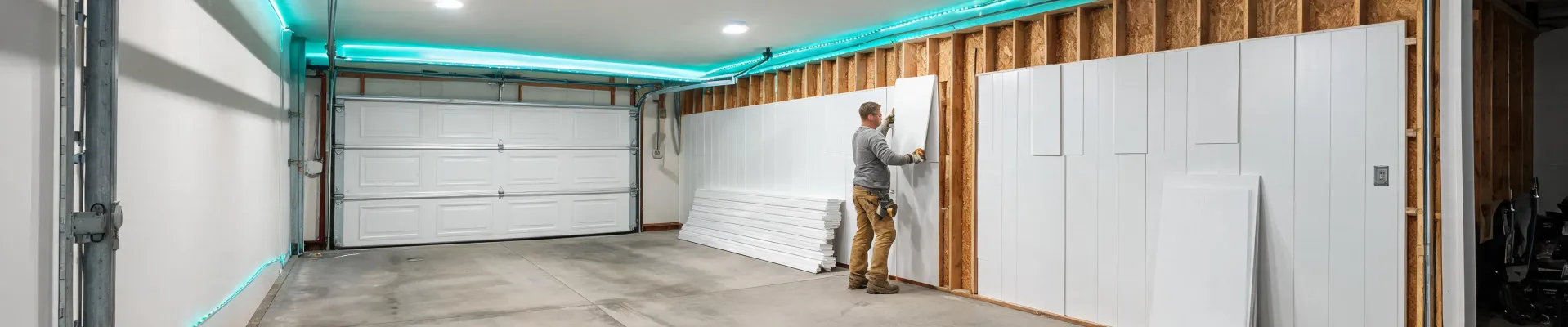
Option B is a panelized finish: a Trusscore 8-ft PVC wall and ceilingboard panel with a finished surface built in. It’s installed directly to framing or over a suitable substrate. There is no mud, no drying time, and no waiting for paint to cure before the space can be used.
But I’m not going to pretend that drywall is obsolete. It has advantages, especially when you need a perfectly seamless monolithic look or when the framing is uneven enough that a skilled taper can make everything disappear with compound. Rigid PVC panels don’t hide problems the same way.
Specification Consistency: What You Are Actually Buying
This is where I’ve become picky over the years. When I receive a submittal for drywall, I expect ASTM C1396 board, a listed finish level, and a paint or wallcovering schedule. The problem is that the final result depends heavily on field skill. The same drywall spec can look excellent with one crew and wavy with another.
With PVC wall panels, the specification is different. You’re buying an engineered profile with interlocking edges and matched trim. The finished surface is part of the product. In quality language, the product has less process variation than a field-applied finish. But that only helps if the spec is clear.
Here’s a short checklist I use when reviewing PVC wall panels specifications:
- Confirm the actual length and width of each panel. The listing may say “8-ft panel,” but verify nominal vs. actual dimensions before calculating coverage.
- Confirm the full profile list: starter strips, inside and outside corners, J-trim, and finish caps. A panel without matched trim is an unfinished system.
- Ask for test methods and reports for surface burning, smoke development, and impact performance. Don’t rely on words like “fire rated” or “impact resistant.”
- Check the manufacturer’s installation conditions. PVC expands and contracts with temperature. Installation details matter more than the panel itself.
- Look for lot traceability. If a production issue shows up later, you need to know which delivery or project is affected.
One concrete memory sticks out. In Q1 2024, I rejected a batch of no-brand PVC panels because the supplier’s own QC report showed a thickness swing of 0.012 inches across one extrusion run. That doesn’t sound like much until you’re trying to lock panels together on a 200-foot wall. I’ve required dimensional verification on every contract since.
Installation: Faster Doesn’t Mean Easier
Drywall and commercial wallpaper work in a strict sequence. Hang the board. Tape the joints. Float and sand. Prime. Paint or hang wallcovering. Each step has a drying or curing time. In a renovation, that can mean weeks of lost occupancy.
A panelized wall system is different. Cut the Trusscore panel to length, attach it to the framing or furring, and continue with the next panel. Trims cover the edges. No joint compound, no drywall sanding, no waiting for paint.
In a Q1 2025 cost review, we compared similar commercial washroom retrofits side by side. The panelized system reduced the number of site visits by two and shortened the finishing phase by about a week. Efficiency matters because time is a real cost.
But I’ll add a warning. I once assumed that switching to rigid panels would make installation foolproof. It didn’t. If the framing is badly warped, a rigid PVC panel can telegraph the problem. Drywall and a thick layer of compound can absorb more field error. The best installation crew for Trusscore is one that understands how to shim and set a true plane.
Moisture, Cleaning, and Life-Cycle Reality
Gypsum board has one obvious weakness: water. Once it gets wet and stays wet, it can swell, soften, and grow mold. Commercial wallcovering can look beautiful for years, but its seams are vulnerable in damp rooms and high-humidity environments.
Trusscore panels are made from PVC, so they handle moisture differently. I won’t say “zero maintenance” or “never needs repair,” because I’ve seen too many sales claims fail in the field. But for areas that need regular washing—bathrooms, food prep, medical cleanrooms, animal care, industrial facilities—a cleanable hard-walled panel is a sensible choice.
What I care about even more is repairability. Can a damaged section be removed and replaced without tearing out three neighboring panels? With a mechanical interlocking panel and trim system, the answer is usually yes. That kind of design detail reduces waste and makes maintenance predictable.
Commercial Wallpaper Sourcing: A Familiar Hidden-Headache Story
If you’ve ever ordered commercial wallcovering, you know the feeling. The sample looks perfect. The specification looks simple. Then the roll arrives from a different dye lot and the color doesn’t match.
Commercial wallpaper sourcing is about more than price. It’s about dye lots, roll widths, pattern repeats, substrate prep, and lead times. I’ve supervised projects where a perfectly good wallcovering was rejected because the installer didn’t check the pattern direction. That’s not a material defect. It’s a sourcing and installation coordination problem.
Panels are not immune to this. If you order Trusscore panels, ask how to identify the production lot. Keep trim from the same order. Store panels flat and protect the ends during transport. These small details prevent the kind of callbacks that eat distributor margins.
My rule after more than five years of inspections is simple: specify the product you intend to use, not a generic category. The more detailed the specification, the fewer surprises.
Acoustic Wall Panels Distributor Buying Guide
Let’s clear up one of the biggest specification mistakes I see: treating every wall panel as if it can perform the same job.
A Trusscore wall and ceilingboard is a hard, cleanable, moisture-resistant wall surface. It is not an acoustic wall panel. Acoustic panels are designed to absorb sound, and they usually rely on tested data from methods like ASTM C423 for sound absorption and ASTM E84 for surface burning. If a project requires sound control, do not substitute a PVC wall panel just because it has the word “panel” in its name.
For distributors adding “acoustic wall panels” to a quote, here is a mini buying guide:
- Ask for the NRC rating and the test report. NRC is a useful number, but it depends on how the panel is mounted.
- Verify the mounting condition. A panel tested with a 2-inch airspace may absorb differently than one mounted directly to the wall.
- Check the surface burning characteristics. The project spec usually states the required class.
- Check moisture and cleaning requirements. Fabric-faced acoustic panels are excellent for sound but not always easy to wash down.
- Plan the wall base first. Many rooms need both sound absorption and a durable wall finish. The two systems can coexist, but only when the design addresses both requirements.
I’ve watched more than one distribution team lose money because they assumed that replacing a fabric acoustic panel with a hard PVC panel would be an acceptable substitution. It isn’t, unless the engineer changes the acoustic design. If sound control is in the specification, respect the acoustic product category.
Which One Should You Choose?
Here’s my practical answer:
Choose drywall with paint or commercial wallpaper when the design truly requires a seamless, traditional finish, when the substrate is rough but skilled finishers can fix it, or when the project budget is based on low first cost and you can accept a longer schedule.
Choose Trusscore 8-ft PVC wall and ceilingboard panels when you want a cleanable, moisture-tolerant, repairable finish with fewer field-applied layers. It works especially well for commercial washrooms, laundry rooms, food facilities, utility spaces, and other areas where time and future maintenance matter as much as the upfront material cost.
And if someone tries to sell you an acoustic wall panel solution, make them prove the performance with test reports. Some walls are meant to be cleaned. Some walls are meant to absorb sound. With the right specifications, you can build both—but you have to know the difference.