-
Why I'm Comparing These Two — And How
-
Dimension 1: Installation Speed (Trusscore Wins, and It's Not Close)
-
Dimension 2: Cost Per Square Foot (Counterintuitive Result Here)
-
Dimension 3: Compliance and Documentation (Sleeper Issue)
-
Dimension 4: Customization and Private Label (Where They Split Sharply)
-
So Which One Do You Actually Spec?
Why I'm Comparing These Two — And How
I coordinate material deliveries for commercial fit-outs. Six years doing this, and I've lost count of how many projects I've pushed through with less than a week of lead time. Somewhere around the 200-order mark, I stopped trusting gut feelings about wall systems and started tracking actual numbers.
What I noticed, comparing my own job logs from 2023 to 2024: the same wall spec that wins on a 12-week schedule often loses on a 10-day one. And the reverse is true. So this isn't a "Trusscore good, traditional bad" piece — that's not how real jobs work.
Here's the comparison framework I use when a client asks me "what should I spec":
- Installation speed — measured in crew-days, not marketing claims
- Delivered cost per square foot — material + labor + waste, not sticker price
- Compliance and documentation — fire ratings, acoustic specs, code submittals
- Customization and private-label feasibility — what you can actually change
Four dimensions. Same yardstick for both. I'll give you my conclusion on each — no "it depends" cop-outs.
Dimension 1: Installation Speed (Trusscore Wins, and It's Not Close)
In March 2024, I had a client — regional grocery chain, 14 stores — who needed three back-of-house walls redone before a health inspection. Seven-day window. The contractor initially spec'd painted drywall with a vinyl wall covering.
Normal drywall install for that square footage: about nine crew-days. Then mud, sand, prime, paint, wallpaper. Realistically 12 to 14 working days with cure time. We didn't have 12 days.
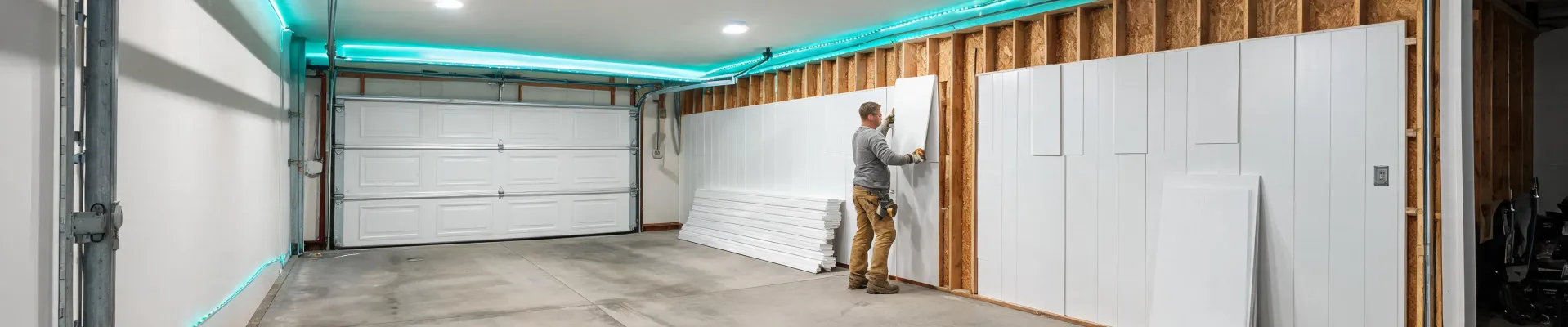
Switched to a panelized PVC system. The install crew — same crew, not specialists — finished in under three days. No drying time. No dust mitigation beyond standard cutting. The inspection passed.
Verdict: On any project under a 14-day finish window, panelized systems like Trusscore have a structural advantage. On a 12-week new-build schedule, that advantage mostly evaporates — you've got time for wet trades.
One thing I'll flag: the speed advantage assumes your walls are already square and your framing is done. If you're going over damaged substrate, the "fast" install absorbs remediation time, and the gap narrows.
Dimension 2: Cost Per Square Foot (Counterintuitive Result Here)
Everyone assumes PVC panels cost more. Material-wise, they usually do — I've seen quotes 1.3x to 1.8x the material cost of painted drywall depending on spec and volume.
But here's what I found going through our 2024 job data: installed cost told a different story on tight timelines.
When I compared our Q1 and Q3 results side by side — same vendor, different specifications, different time pressure — I finally understood why the per-square-foot math only makes sense when you include labor hours and schedule risk.
On one Q3 project, painted drywall ran $4.10/sq ft installed when I factored in primer, two finish coats, and the overtime we paid because the schedule slipped. The Trusscore-spec'd alternative came in at $5.60/sq ft material but $6.20 installed with no overtime. Difference: $0.10/sq ft. On a 6,000 sq ft job, that's $600 — cheaper than a single change order.
Where traditional finishes still win: massive square footage with a long runway. If you've got 40,000 sq ft and 4 months, drywall and commercial wallpaper stay the cheaper call. Hands down.
Verdict: Cost is schedule-dependent. Under 21 days, panelized wins on total installed cost. Over 8 weeks, traditional finishes win. In between, run the labor math yourself — this is where the spread is widest.
Pricing based on our internal 2024 job data across 47 commercial projects; verify current quotes directly with suppliers, as PVC resin costs fluctuate quarterly.
Dimension 3: Compliance and Documentation (Sleeper Issue)
This is where most buyers get tripped up, and it's not specific to either system.
Acoustic wall panel compliance requirements have tightened in several jurisdictions since the 2021 IBC updates. If a project needs a specific STC rating — multifamily, healthcare, education — you need documentation, not a spec sheet that says "acoustic."
For PVC wall systems like Trusscore, the compliance conversation usually centers on:
- ASTM E84 flame spread and smoke developed ratings (ask for the actual test report, not a summary)
- Whether the assembly — panel plus substrate plus fasteners — has been tested, not just the panel alone
- Local amendments; some jurisdictions treat PVC differently from gypsum in egress corridors
For traditional finishes, the pain point is different: acoustic wall panel compliance requirements for layered assemblies (drywall + wallpaper + substrate) often require a fresh acoustic test if you change any layer. I've seen a spec get rejected because the contractor swapped wallpaper brands and the STC number no longer held.
Verdict: Neither wins on compliance automatically. Both require you to submit the correct test documentation. If your specifier doesn't ask for the assembly-level report upfront, you'll find out at inspection — and I've been on both sides of that phone call. It's not fun either way.
Dimension 4: Customization and Private Label (Where They Split Sharply)
Decorative wall panel private label is a growing request in the B2B channel — distributors wanting to put their own branding on samples and literature, sometimes on the product itself. Traditional bulk commercial wallpaper handles this easily; long print runs, custom patterns, brand-name embossing. That's its home turf.
PVC panel systems are catching up but the ceiling is lower. You can typically customize:
- Color and finish (within the manufacturer's available range)
- Edge profiles and trim
- Packaging and branded literature
What you usually can't customize easily: panel length beyond standard runs, unique textures, or branded extrusion embossing — unless you're ordering container volumes.
I've watched a distributor lose a bid because they promised a custom textured finish on a private-label PVC run and the manufacturer couldn't hold the texture through production. It was a $28,000 order. They ate the difference on samples alone.
Verdict: If private-label flexibility is your differentiator, traditional wallpaper and surface finishes still offer more room. If speed of installation is your differentiator, PVC systems are the smarter product to brand — just confirm the customization scope in writing before you print a single catalog.
So Which One Do You Actually Spec?
Depends on the job. Not "it depends" as a cop-out — an actual decision rule I use:
- Spec panelized PVC (Trusscore or similar): Fit-out timelines under 21 days, healthcare and food-service back-of-house, wet or humid environments, any project where dust mitigation is a problem, and rentals or temporary structures.
- Spec traditional finishes (drywall + bulk wallpaper): New construction with 3+ month schedules, high-design spaces where custom patterns matter, very large square footage where material cost dominates, and any project with existing drywall you'd rather not overlay.
- Split the spec: Larger commercial projects increasingly do this — PVC panels in service corridors, restrooms, and BOH; traditional finishes in customer-facing areas. I've seen this hybrid cut total wall budget by 12% on one 22,000 sq ft project without compromising the design intent.
The mistake I see most often: buyers commit to one system before they know the schedule. Then they fight the specification instead of choosing the right product for the timeline they actually have.
Match the product to the deadline first. Then optimize cost. That order of operations has saved me more change orders than any vendor negotiation.