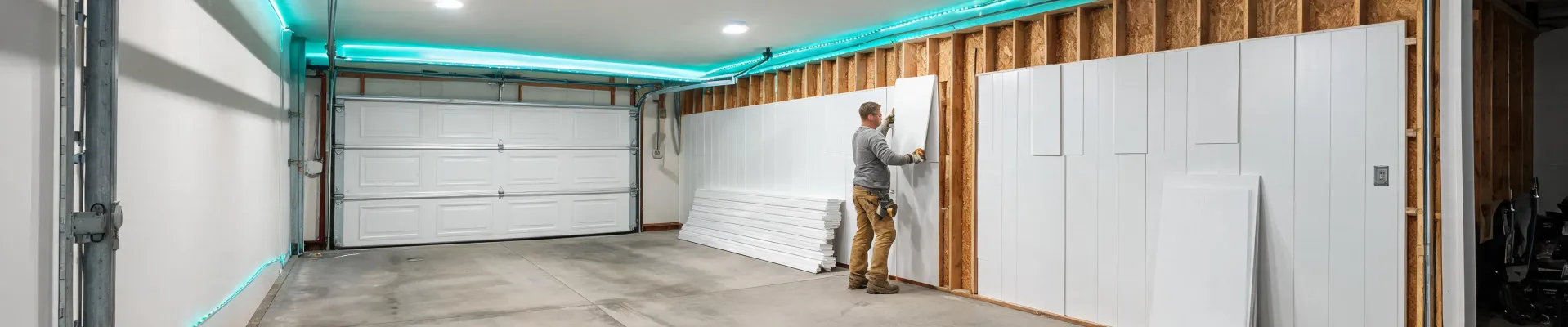
The batch arrived on a Tuesday. Forty-two pallets of what was supposed to be 3/8-inch PVC ceiling board for a 40,000 sq ft commercial installation in Ohio. I walked the receiving bay with my calipers and a copy of the approved spec sheet, same as I'd done hundreds of times. By pallet six, I knew we had a problem.
Thickness was reading 9.2mm against a 9.5mm spec. That's a 3% deviation—well within what most suppliers call "industry tolerance." But this wasn't a tolerance issue. The panels had a subtle bow, maybe 1/16 inch across an 8-foot length. On a ceiling grid with tight seams, that's visible. On a spec job where the architect had already flagged joint alignment as a punch-list priority, that's a redo.
How I Got Here
I've been reviewing building product deliveries for a mid-size distributor for about seven years. The company I work for moves roughly 200 line items a month across PVC panels, trims, and slatwall. I'm the guy who signs off before anything goes to a job site—or gets returned.
In my first year, I made the classic rookie mistake: I trusted the phrase "meets industry standard." A supplier shipped us a batch of PVC wall panels where the printed spec said .350 inches nominal. Actual measured thickness ranged from .328 to .344. When I flagged it, the rep said, "That's within ASTM. That's standard."
He wasn't lying. He just wasn't telling the whole truth.
I didn't have a written tolerance spec in the PO. I didn't have a defined measurement protocol. I had a verbal understanding that "nominal" meant "close enough." That batch went into a hotel corridor job, and six months later we were fielding complaints about panel deflection at the seams. Cost us about $18,000 in replacement labor and freight. We didn't lose the customer, but we should have.
"The issue wasn't the supplier. The issue was me assuming 'standard' meant the same thing to both of us."
What I Changed (And What Almost Slipped Through)
After that corridor job, I built a verification protocol. Nothing fancy—just a one-page checklist that every PVC panel PO had to reference:
- Nominal thickness + explicit min/max tolerance (in writing)
- Flatness spec: max bow per linear foot
- Color match standard: Pantone reference or approved physical sample
- Trim profile: measured against a retained master sample
- Fire and smoke ratings: current third-party test report number, dated within 24 months
That last one is where the trouble usually hides. PVC wall panels can carry different flame-spread classifications depending on formulation and thickness. If you're specifying for a commercial interior, you need the actual test data—not a marketing sheet that says "Class A fire rating available." Available for which product, at which thickness, tested by whom, and when?
I ran a blind test with our install team in early 2023. I gave them two sets of panels—same color, same nominal thickness. One set met our new flatness spec; the other was at the outer edge of the old verbal tolerance. Nine of eleven guys picked the tighter-spec panels as "more professional looking" without knowing which was which. The cost difference was about $0.14 per square foot. On that 40,000 sq ft project, that's $5,600 for a measurably better install.
You'd think after that, I'd never cut a corner again. But overconfidence is a real thing.
Last fall, we had a rush order for a private-label wall panel program—customer's brand, our sourcing. I knew I should get written confirmation on the edge profile before the extrusion run. But we'd worked with that vendor for three years, and the profile was "basically the same as last time." I skipped it.
It wasn't the same. They'd changed a chamfer angle by two degrees. It didn't show until install, when the trim pieces wouldn't seat flush. We caught it after 1,200 linear feet had shipped. The rework cost the vendor about $9,000, and it cost us a week of schedule. Nobody yelled, but I felt it.
The Real Lesson: Education Is a Two-Way Street
Here's what I've come to believe after seven years of this: most quality problems aren't malicious. They're informational. The supplier doesn't know what you don't tell them. The installer doesn't know what the spec sheet actually means. The customer doesn't know what questions to ask.
The "standard is standard" thinking comes from an era when buyers and sellers were in the same city, same industry, same conversation. Today, a PVC panel might be extruded in one state, trimmed in another, and specified by an architect who's never touched the product. That chain only works if every link is explicit.
This is true for Trusscore panels and ceiling board, and it's true for any decorative wall panel specification guide you pick up. The brand name on the box matters less than the numbers on the spec sheet—and whether those numbers match what actually shows up on the truck.
I'd rather spend twenty minutes on a spec call than two weeks on a redo. An informed supplier asks better questions. An informed customer makes faster decisions. And an informed installer doesn't call me from a job site asking why the trim doesn't fit.
What I'd Tell Someone Starting This Job Tomorrow
Write it down. Every tolerance. Every color reference. Every profile dimension. "Industry standard" is a starting point for a conversation, not a substitute for one.
Measure the first pallet, not the last. If the first one's off, the rest probably are too.
And when you think you've seen it all—when you've been doing this long enough that you're tempted to skip the checklist for a vendor you trust—that's the exact moment to slow down. I'm not 100% sure why that is, but it's been my experience more often than not.
The batch from last Tuesday? We rejected it. The supplier redid the run with the flatness spec written into the PO. Cost them a week and a half. Cost us nothing but a few uncomfortable phone calls. That's the system working the way it should.