The project I didn't ask for
In February 2024, our company took a storage room on the second floor and turned it into a small wellness space. Two showers, a changing bench, some lockers. The idea came out of a return-to-office survey — people wanted somewhere to rinse off after biking in or a lunchtime run.
I'm the office administrator. "Wellness space" in a planning meeting becomes "someone has to buy everything" in an action item, and that someone is usually me. So I ended up owning procurement for the whole room, including — apparently — the glass shower enclosure.
Not ideal, but workable. I've bought office chairs, HVAC service contracts, and roughly 60 boxes of copy paper a year. How hard could glass be?
More than I expected, frankly.
Lesson one: "frameless" isn't one product
I started the way I always do. Three quotes: a local glass fabricator, an online retailer, and a wholesale distributor our contractor recommended. Compare line items, check lead times, verify invoicing capability.
The three quotes came back, and they were, of course, apples to oranges. One priced the glass only. One bundled hardware and installation. One quoted per square foot but wouldn't say whose hinges they were using. Comparing them on price alone would have been a mistake — I nearly made it anyway.
About twenty minutes into that process, I realized I'd been using one phrase for at least four different products. A frameless shower screen is not the same thing as a hinged frameless glass door for a bathroom, which is not the same as a bifold shower door, which is not — and this is the one that got me — the same as a tub shower door.
The tub configuration is its own category. You're anchoring into a tub apron rather than a tiled wall, and "frameless" in that context almost always means semi-frameless — there's usually a bottom track or a header bar, because a truly unsupported panel over a tub is heavy, expensive, and kind of impractical.
I didn't know that when I placed my first order. I saw "frameless shower doors for tubs" on a product page and clicked through like it was a checkbox. It's not a checkbox.
The mistake
I knew I should have waited for the tile to be finished before ordering. But the vendor had a lead time, the schedule was tight, and honestly I thought, what are the odds the opening is more than half an inch off the plan?
The odds caught up with me. One shower measured 58 3/4 inches instead of the planned 60. The panel I'd ordered was cut to 59 1/4. It didn't fit, and by the time we knew that, the return window had closed and the glass had already been tempered. You can't recut tempered glass. It just shatters.
That was about $1,100 out of the department budget. Not catastrophic, but explaining it to my VP was not fun. "I assumed the measurements were right" is not a sentence a procurement person ever wants to say out loud.
What I changed
New rule: no glass order without a signed field measurement from whoever is installing it. Actual tape measure, after substrate is done, with a photo attached to the PO. Plans lie. Drawings lie. Nothing lies like a tape measure.
I also started asking three specific questions before I'd even accept a quote:
- Is the enclosure actually frameless, or semi-frameless? Read the spec sheet, not the marketing page.
- How does it mount — channel, header bar, or hinges drilled through the glass? Each one has different framing and reinforcement implications.
- What is the glass thickness, and what safety-glazing standard is it tested to?
That last one matters more than people realize. Commercial bathrooms in most U.S. jurisdictions require safety glazing, which for shower doors generally means tempered glass tested to standards like ANSI Z97.1 or CPSC 16 CFR 1201. If a vendor can't tell you which standard their glass is tested to, that's a red flag — full stop.
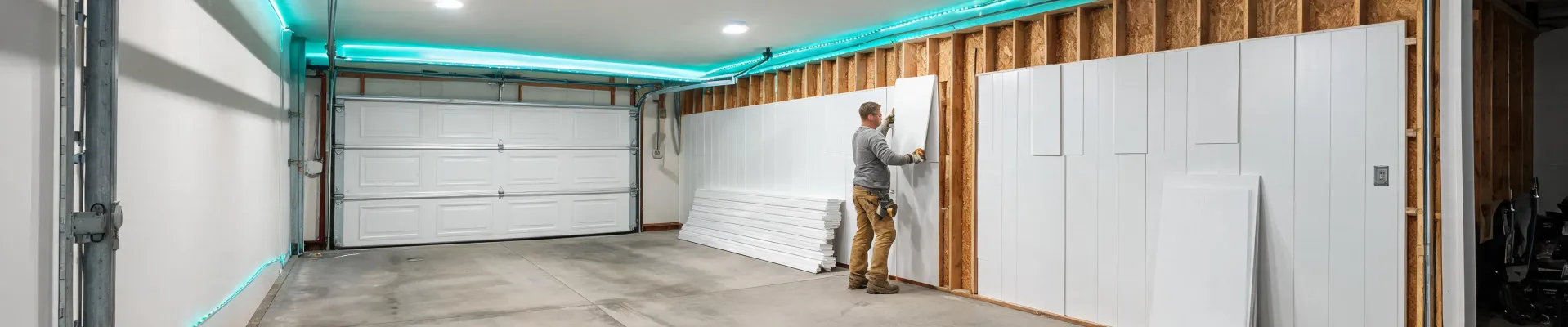
One more variable I hadn't counted on: wall finish depth. We used PVC wall panels on the wet walls — Trusscore, mostly — and coordinating those dimensions with the glass cut list changed the finished opening. If you're specifying wall panels and glass at the same time, pull them into the same conversation. Otherwise you're going to be re-ordering something.
The other thing I changed was internal. I started sending a one-page spec summary to the facilities lead and my VP before I placed any order over $500 — what we're buying, why this configuration, what the lead time is, and what could go wrong. It's extra work. It also means nobody is surprised later, including me.
"Frameless" is a spectrum, not a binary. Ask for the spec sheet.
How it actually landed
We got there, eventually. The 60-inch showers ended up with frameless hinged doors — clean lines, easy to squeegee, no bottom track collecting soap scum. The tub got a semi-frameless bifold with a bottom track. Honestly? It looks fine. It cost about 40% less than the fully frameless spec I'd originally wanted, and it opens the way you actually need it to open when you're stepping out of a tub.
To be fair, the fully frameless version would have photographed better. But bifold doors give you access, and access is kind of the whole point. I get why people chase the frameless look — it's clean and it feels premium. The calculus just changes when you're buying for real users instead of a showroom.
What I'd tell the next person doing this
A few things, in no particular order:
- Field-measure after the substrate is finished. Every time. No exceptions.
- "Frameless" means different things in different applications. Read the spec, not the headline.
- For tub openings, bifold or sliding doors usually beat a fixed panel. You need to get in and out.
- Confirm the safety-glazing standard before you order.
- Coordinate wall finishes and glass at the same time.
- Ask vendors to explain, not sell. The good ones actually want you to understand the product.
I don't have hard data on how often re-orders like mine happen industry-wide — I wish I'd tracked our actual overruns more carefully. What I can say anecdotally is that our project ran about six weeks longer than planned, and most of that was my own doing.
This worked for us, but our situation was pretty simple: two showers and one tub in a small commercial renovation, with a contractor I trust. If you're specifying a hundred of these for a hotel or a multifamily build, the calculus is completely different, and you probably want a specifier involved from day one — someone who does this every week, not every four years.
An informed buyer asks better questions. I learned that the hard way, one glass panel at a time.