-
1. What does trusscore cost per square foot?
-
2. What's actually included in the system?
-
3. What should I look for in a PVC wall panels supplier?
-
4. How do decorative wall panel OEM and private label work?
-
5. What costs do people forget to calculate?
-
6. What should a panel supplier's quote show me?
-
7. How do I check if a supplier will actually deliver on time?
I'm the procurement coordinator for a commercial interiors company—about 180 people across two locations. I handle materials ordering for our fit-out projects, roughly $1.2M a year across 15 vendors, and I report to both operations and finance.
When I started sourcing PVC wall panels back in 2022, my approach was simple: find the lowest per-sheet price and go. That bit me. Three years and one very educational budget overrun later, I work from a different playbook.
If you're searching for trusscore panels, trying to understand trusscore cost, or wondering how decorative wall panel OEM and private label work—here are the 7 questions I now ask every supplier before committing. You can jump around.
- 1. What does trusscore cost per square foot?
- 2. What's actually included in the system?
- 3. What should I look for in a PVC wall panels supplier?
- 4. How do decorative wall panel OEM and private label work?
- 5. What costs do people forget to calculate?
- 6. What should a panel supplier's quote show me?
- 7. How do I check if a supplier will actually deliver on time?
1. What does trusscore cost per square foot?
Honestly, it varies depending on project size, location, and whether you're buying through a distributor or direct. But the panel price is only the starting point. Trim, fasteners, freight, and installation labor all factor in—and those are where quotes really diverge.
What I'd recommend is asking every supplier for the same format: panel unit price, trim price, freight quote, and estimated total for a typical room. Compare like-for-like. If one supplier shows complete pricing and another shows just the panel price, the second one will look cheaper on paper but won't be on the final invoice.
And if a supplier quotes a blanket per-square-foot number without asking about your wall and ceiling dimensions, that's a red flag. The numbers are only meaningful in context.
2. What's actually included in the system?
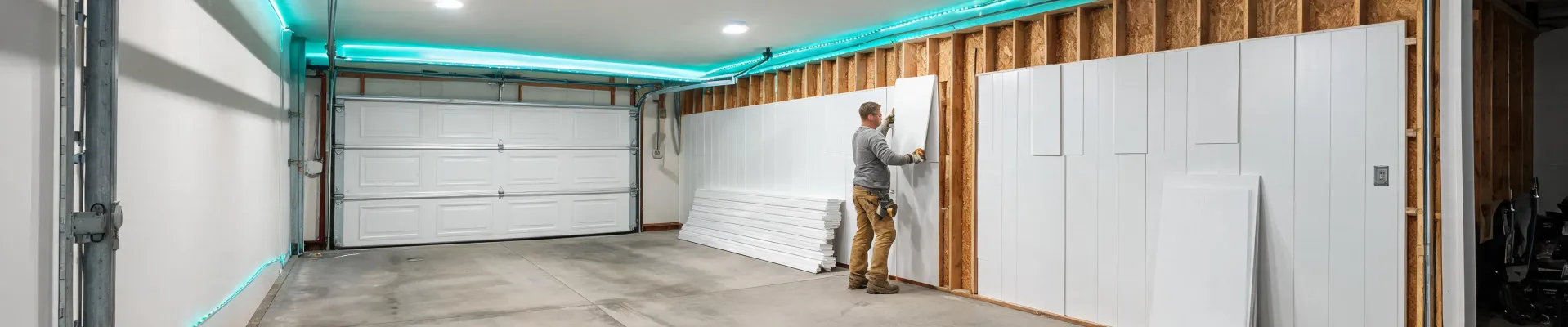
Trusscore is a wall and ceiling system—not just panels. Trim profiles for corners, edges, and transitions are part of the package, and those pieces are what make an installation look finished and perform well over time.
When I compared options from different suppliers, the difference wasn't really the panel spec. It was system support—whether we could order everything from one place and trust it to fit together without the installer having to improvise on site. A small difference in panel cost disappears fast if the crew has to make field modifications because profiles don't match.
3. What should I look for in a PVC wall panels supplier?
This is the question I wish I'd asked more carefully from the start. Here's my checklist:
- Verifiable specs. Published values for impact resistance, fire performance, acoustic properties—not just adjectives like "durable" or "heavy-duty."
- Transparent wholesale pricing. If you have to make three calls to get a price list, that tells you how future transactions will go.
- Written lead times. And a willingness to discuss their actual on-time record.
- Clear return policies. What happens if a delivery shows up damaged? Who covers the replacement and the shipping?
- A real person to talk to. Email-only support gets frustrating fast when you have a question at a job site.
Also: ask for samples. Every time. A physical sample tells you more than a spec sheet, and any supplier who's confident in their product will send one.
4. How do decorative wall panel OEM and private label work?
If you're a distributor or contractor who wants panels under your own brand, you're looking at OEM or private label. The difference is fairly simple.
OEM means the manufacturer builds to your specific requirements—custom profiles, sizes, colors. It offers the most differentiation, but it requires volume because tooling and setup costs add up. Unless you're ordering serious quantities, it's hard to justify.
Private label (white label) takes the manufacturer's existing product and puts your branding on it. Lower commitment, faster turnaround, and generally a much more accessible minimum order quantity.
Before signing anything, ask:
- What's the minimum order for private label?
- Can you brand the panels, the trim, the packaging, or all three?
- How do quality inspections work for branded orders?
- Who's responsible for damage in transit?
That last one is important. Damaged panels are one of the biggest hidden costs in this category. Get the answer in writing.
5. What costs do people forget to calculate?
When I first compared wall panel suppliers, I only compared material costs. Then I learned about the rest:
- Freight. Panels are bulky and shipping adds up quickly. Some suppliers quote freight separately after you're committed—make sure it's stated upfront.
- Waste factor. Damaged panels, cutting errors, and boards that don't quite match are a normal part of construction. Build in a buffer.
- Installation labor. A system that installs cleanly saves hours. A system that fights your crew costs overtime.
- Rework. If product quality is inconsistent, your crew gets paid twice to do the same job.
I built all this into a simple spreadsheet after a project in 2023 where our "low-cost" supplier turned out to be 14% more expensive than the higher-quoted alternative, once I accounted for freight delays, damaged boards, and the extra labor. Seeing it side by side in numbers made the case better than any argument.
6. What should a panel supplier's quote show me?
I look for these things specifically:
- Line-item pricing for panels, trim, and accessories
- Freight terms explained clearly—is it delivered, or FOB origin?
- Estimated delivery window, written into the quote
- Payment terms and any volume discounts
- What is not included
That last point is where surprises hide. I've seen quotes look competitive until I realized they excluded freight for 200 panels, or that an essential trim profile was billed separately. It's not that the supplier was dishonest—the quote was just incomplete. The full cost should be on the table before you decide, not after.
7. How do I check if a supplier will actually deliver on time?
This might be the most underrated question in building material procurement. Anyone can quote a 5-day lead time. Delivering on it consistently is completely different.
In 2024, a supplier quoted us a 5-day lead time and shipped 15 days later. Our crew was scheduled, the client was waiting, and the delay cost us more than we'd saved on panels. I still remember the phone call to my VP explaining the timeline.
So now I ask every supplier: what percentage of your orders ship on time? And I follow up with recent references. A supplier who says "about 85% last quarter, and here's why" is more reassuring than one who claims 100% without missing a beat.
Reliability is a specification. It deserves the same attention as impact resistance or fire ratings. At our volume—a few hundred panels at a time—these seven questions catch the issues that actually eat budgets. If your operation is bigger, the list just gets longer.