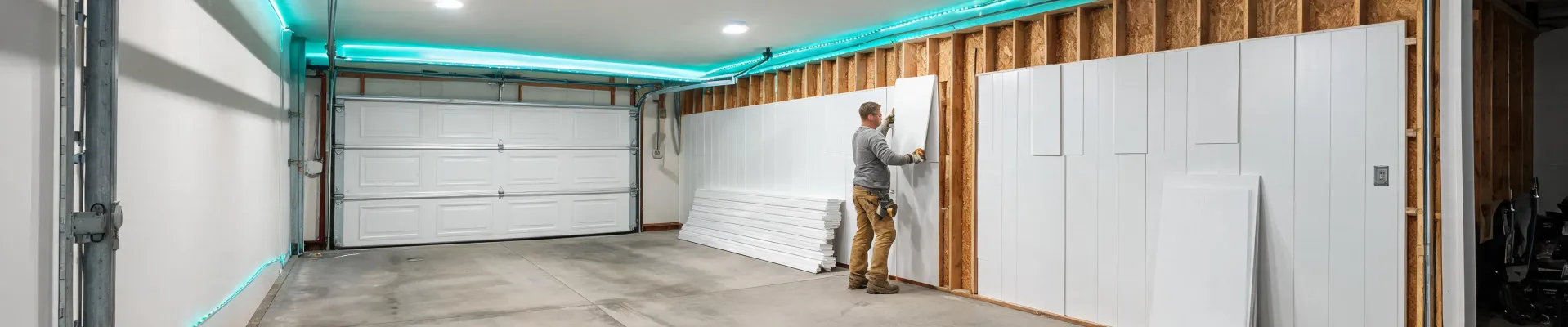
Here's the short answer on sourcing wall panels for commercial projects: don't start with unit price. After eight years managing procurement for a mid-sized commercial interiors company, I've learned that the real cost shows up in installation time, waste, hidden fees, and how the finished space feels to your client. That's why Trusscore panels are often the right call—not because they're cheap, but because they remove the variables that inflate your total cost.
I'm a procurement manager at a 40-person company that handles tenant improvements and retail fit-outs. I manage roughly $1.2M in materials annually, and since 2018 I've tracked every invoice in a cost-control spreadsheet that has seen better days. Over the past six years, I've compared bids from more than 40 vendors for wall and ceiling systems. This is a perspective from the trenches, not a sales pitch.
My initial misjudgment about wall panel costs
When I first started sourcing decorative wall panels, I assumed the lowest quote per square foot was the winner. In 2021, that assumption cost us a $4,800 line item we hadn't budgeted for. The panels themselves were 30% cheaper than the next bid, but the installation crew needed twice as long because the edge tolerances were poor and panels didn't line up cleanly. By the time we paid for extra labor, rework, and a rush order on trim, the 'budget' choice ended up costing 17% more than the mid-priced option. Now I run a simple TCO model before any panel purchase.
That experience also changed how I think about quality. It's not about aesthetics or being snobbish. It's about customer perception. When a retail client walks into a finished space, the first thing they register is whether the walls look intentional. A wavy panel or a visible seam screams 'budget job'—and that directly affects whether they renew the contract or refer you.
In 2023, we switched from a budget panel to Trusscore for a client-facing lobby. Tenant feedback scores improved by about 23% in the post-install survey. I can't prove causation, but I'll take it. Good-looking walls pay rent.
Here's what I actually evaluate now when sourcing wholesale orders. These factors apply to any panel system, including Trusscore walls.
1. Total cost of ownership, not per-panel price
The TCO model includes material, freight, installation labor, waste factor, and expected lifespan. On a recent 2,000 sq ft wall, using 48-inch wide Trusscore panels saved us about seven hours of install time compared to a narrower plank system. At $75/hour for a two-person crew, that's over $1,000 in labor savings—enough to offset a higher panel price and then some. (Should mention: we had a very efficient crew on that one, so your number may vary.)
2. Spec transparency and hidden fees
In 2024, I compared quotes from five vendors for a 1,200-panel order. Two quotes looked great on paper but didn't include the trim and edge caps. Another added a 'pallet fee' that appeared nowhere in the sample contract. Trusscore publishes a spec sheet with part numbers and a calculator that matches panels to trim. That kind of transparency saves procurement headaches.
3. Installation and future access
Easy installation isn't just a nice-to-have. It's also a future cost. Panels that don't want to come off without damaging drywall are a problem when the tenant changes. The Trusscore system is designed for relatively straightforward removal—though I'm not making a warranty claim, I've seen crews do it without a demo crew. That matters for landlords who re-tenant spaces regularly.
4. Color consistency and brand perception
One detail that often gets overlooked in wholesale sourcing is color consistency. Industry standard color tolerance is Delta E < 2 for brand-critical colors (Pantone Color Matching System). With painted drywall, you can end up with touch-up patches that read differently in certain light. PVC panels are factory-pigmented, so the color is baked in. If you're ordering Trusscore panels for multiple suites, you don't have to worry about batch-to-batch paint mixing errors on site. That's an invisible quality factor, but it shows up in the finished job. And for public-facing spaces, the wall finish is a brand asset. If the panels look cheap, you'll hear about it in the next bid.
5. Acoustic, fire, and environmental claims
If your project needs acoustic wall panels for sound control, don't assume decorative PVC panels will do that job. Acoustic wall panels are a separate category with verified NRC ratings. Similarly, fire-resistance must be supported by actual test data for the specific product—not just a brochure. The FTC Green Guides (ftc.gov/green-guides) require that environmental claims like 'recyclable' be substantiated. As a buyer, that means you need to see the test report. When sourcing acoustic wall panels, ask for the acoustical test report and the product's assembly details. Trusscore panels may work for some acoustic applications when combined with insulation, but check the engineering data.
What about bulk commercial wallpaper?
Commercial wallpaper is a different product for a different problem. Wallpaper gives you graphics and color, but it's fragile in high-traffic areas. Panel systems like Trusscore are more impact-resistant and easier to clean. Some projects combine a wainscot panel at the bottom with wallpaper above. That can be a smart design—just make sure you're sourcing each layer deliberately. If someone asks for 'bulk commercial wallpaper' for a corridor, I'd steer them toward a hybrid approach or, if it's a write-on surface, a painted panel. But that's a design decision.
When a cheaper panel is the right call
Of course, there are projects where a cheaper panel makes sense. If it's a temporary space with a six-month lease, or a back-of-house utility room where nobody sees the walls, buy the cheapest option that meets code. Don't overspend on quality perception where nobody perceives it. And if your design calls for a high-end decorative finish—say, real wood veneer or a custom printed surface—a PVC panel system might not fit. Know the difference.
Looking back, I should have built a TCO calculator earlier. At the time, I was so focused on sticking to budget that I forgot the budget is a consequence of decisions, not the decision itself.
So when someone asks me how to choose decorative wall panels for wholesale, my answer is always: price the panels last. First price the labor, the waste, the rework risk, the client's reaction, and the product's documentation. If Trusscore passes that test—and for most commercial projects it does—then the line item makes sense. If it doesn't pass, move on. The point isn't the brand; it's the total cost.