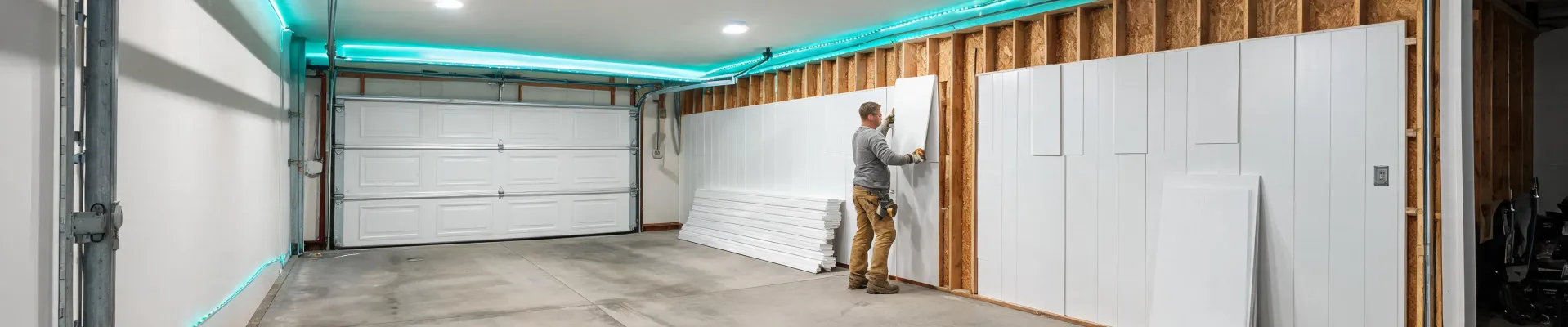
If you're asking how to choose wall panels for wholesale, start in an uncomfortable place: don't compare panels by the best unit price. Compare the fully installed wall cost, which includes panels, coordinating trims, installation labor, scrap, and the odds of a callback. A panel with the best price per sheet can be the most expensive wall you ever sell. I learned this after eight years and roughly $38,000 in buying mistakes.
Who's Sharing This, and Why It's Not a Brochure
I'm a purchasing manager at a building-supply distributorship in southwestern Ontario. I've been selecting wall and ceiling panel products for contractors and property managers since 2018, and I've personally made eight significant sourcing mistakes. Added up, those mistakes cost roughly $38,000 in wasted material, expedited freight, rework, and lost credibility. They all shared the same root cause: I was comparing products on paper rather than as installed wall systems.
Since Q2 2024, I've kept the pre-order checklist shown later in this article. Our purchasing team has not made a panel sourcing error since we started following it. That isn't because I got smarter. It's because I stopped making decisions the way many panel products get marketed.
First Mistake: A Sample Isn't a Production Run
In September 2019, we quoted a renovation for a 46-room hotel. The lobby was being handled by a commercial wallpaper supplier, which was the right call for that decorative space. Our responsibility was a 140-foot service corridor and the housekeeping alcoves.
We bought 1,430 sheets from a decorative wall panels OEM whose showroom sample honestly stopped me cold. The finish was clean, bright, and had a pleasant hand-feel. I got approval from our general manager, placed the PO, and waited.
The panels arrived in three production lots. Nobody at the warehouse checked lot numbers. The installer pulled from multiple pallets and stacked them together, because under warehouse lighting, every panel looked the same. On the wall, though, some adjacent panels reflected the overhead lights differently. Not a color problem, exactly. One batch had a slightly lower gloss and a softer surface reflection. It was subtle enough that most people couldn't name the issue, but it was obvious enough that the client's designer noticed it immediately.
The affected wall had to be partially stripped and reinstalled after sorting panels by lot. That mistake cost about $9,700 in rework and put our relationship with that general contractor under real strain.
The lesson wasn't 'OEMs are bad.' The lesson was that every large panel order can contain multiple production runs, and if the supplier won't commit to batch continuity, you need to verify it yourself before installers start pulling from mixed pallets.
Second Mistake: Comparing Cost Per Sheet Instead of Cost Per Wall
In March 2022, I found a supplier offering white PVC panels at $0.29 per square foot less than our current line. On a 960-sheet order, the projected savings were about $8,900. My boss asked why we weren't switching immediately. I didn't have a good answer, so we ordered a trial quantity.
The panels looked fine at the warehouse. They were white, rigid, and visually similar to the product we already stocked. The difference showed up during installation: the tongue-and-groove edges were not milled consistently. Some panels locked together cleanly; others left a slight offset at the seam. The installers tried to force alignment, then tried shimming, then tried caulking. That last option was the worst, because it looked acceptable for about a week and then collected dirt in the low spots.
On the affected runs, installation took roughly 40 percent longer than the same crew needed for our standard panel. Overtime and callbacks consumed the entire $8,900 paper savings. The contractor stopped using that product after the first project, and I couldn't blame him. The client's first impression of that wall became our company's first impression too.
The phrase I now repeat to our team: nobody buys a panel. They buy a finished wall. Comparing panels without including how they go together and how they finish is comparing ingredients while ignoring the meal.
The Comparison That Fixed My Evaluation Process
In Q4 2025, our team built a side-by-side comparison wall with four panel sources: our existing Trusscore wall panel system, two commodity PVC options, and one decorative panel line from an OEM. We used the same two installers, the same wall dimensions, and the same inside and outside corner details. The goal wasn't to judge surface appearance from three feet away. It was to measure what each product did to installation speed, seam quality, and finishing effort.
What surprised me most was how close the products looked before installation and how far apart they ended up after. From a distance, all four walls looked acceptable. Up close, the differences were in seam flatness, corner crispness, and how much improvisation the installer needed. The commodity panels were cheaper per sheet, but they made the installer slower and the finish less predictable. The best-looking decorative panel came from an experienced OEM, but its restocking lead time made it impractical for ongoing wholesale inventory.
Trusscore panels performed best in the metrics that actually matter to a distributor's reputation: predictable installation, clean seams, and a full range of trim and accessories from the same product family. The Trusscore wall panel system didn't win because it looked more premium in a brochure. It won because the finished wall looked consistent and the installer didn't need to invent solutions at the corners and edges.
That was the moment I understood my old assumption was backwards. I had assumed panel quality meant surface quality. In practice, perceived quality is dominated by flatness across seams and crispness where a wall ends or turns. A perfectly smooth panel can still produce a bad impression if the trim doesn't line up or the edges don't sit flush.
The Wholesale Wall Panel Checklist I Use Now
Our team now evaluates every wall panel line, including Trusscore panels, against the same five-point checklist. If a product fails on any point, we don't stock it in wholesale quantities.
- Batch continuity. Ask the supplier how they manage color and gloss across production runs. Request lot numbers and cut samples from each batch before the full PO.
- Complete accessory family. Does the manufacturer offer starter strips, inside corners, outside corners, and finishing trims? If the answer is 'your installer can source that elsewhere,' expect inconsistent corners and slower labor.
- Specification documentation. Ask for current documentation related to fire, impact, moisture, and cleaning. A contractor working on commercial projects cannot rely on a supplier's verbal reassurance.
- Full mock-up install. Do not evaluate a panel by mounting one sheet on a flat board. Build a real wall with a corner, a transition, and an edge termination. That reveals what the finished product will actually look like.
- Restock reality. Ask what happens when a panel gets damaged on site. Can the contractor get a replacement sheet in days, or will the supplier be weeks out? Job-site damage is normal. Slow replacement is what turns a small problem into a client complaint.
This is the process that led us to make Trusscore panels our primary wall and ceiling line. They were not always the lowest quote on a unit-price basis. But they delivered the most predictable installed result, and predictability is what protects a contractor's margin and a distributor's brand.
When This Checklist Matters Less
I don't want to pretend this approach applies to every situation. If you're buying panels for a temporary environment or a short-term project where the client simply needs a clean surface for a few years, a commodity product may be perfectly acceptable. Not every wall needs a full accessory ecosystem.
There are also design situations where panels aren't the right answer at all. If the project requires bold texture or complex printed patterns, a good commercial wallpaper supplier may do the job better than any rigid panel. If the client wants a custom decorative finish with unique embossing or unusual coatings, a decorative wall panels OEM might be the right source. The goal isn't to force every project through one brand. The goal is to make sure the finished surface protects the reputation of everyone involved.
In the end, a wall panel order is not really a product purchase. It is a promise that gets installed in someone's building, and every finished wall becomes a small piece of your company's name. Choose the panel line as if the client will blame you personally for every seam, corner, and reflection. In my experience, they usually do.