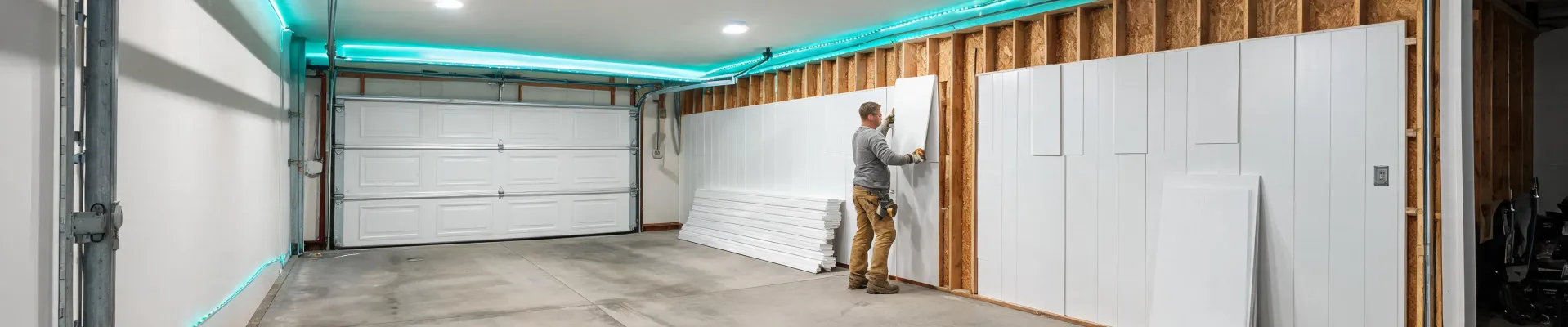
I've made a $4,800 mistake with PVC wall panels. It's not something I'm proud of, but it's the reason I now have a strict buying process—and it's why we ended up stocking Trusscore panels and trim.
If you're a contractor or a distributor searching for information about PVC wall panels, you've probably seen a dozen product pages. What follows isn't one of them. It's a post-mortem.
Let me back up.
The Assumption That Cost Me
In September 2023, our company landed a 12,000-square-foot food processing facility. The spec called for washdown-capable walls. We'd done similar projects with FRP and tile. But this time, the architect specified PVC wall panels.
I thought that was an easy job. At the time, I'd been ordering wall panels for six years, and my view was simple: PVC is a commodity. If the thickness, the finish, and the price matched, the panels were interchangeable.
That assumption is what cost me.
The Low Quote That Should Have Raised Red Flags
We needed about 1,500 panels plus trim. I got quotes from two suppliers.
One was an established distributor carrying a system we knew—Trusscore. Their quote was higher. The other was a broker offering 'the same thing' for 20% less. Their data sheet looked similar. The thickness was there. The dimensions were there. They even said 'Class A fire rated' in the description.
I went back and forth for a week. My spreadsheet said the broker saved us $3,200 on material. My gut said something was off—slow email replies, vague answers about manufacturing location, and a sample that took three weeks to arrive.
I chose the spreadsheet. That was the first mistake.
In hindsight, I should have known better. I'd written a guide for our own team about buying materials, and one of the bullet points was 'always verify samples.' I didn't follow my own advice. That fact still stings.
When Reality Caught Up
The panels arrived in eight weeks, not six. The first sign of trouble came before we even opened the boxes: the pallet labels showed two different production dates and two different batch numbers. I told myself that was normal. It's not.
Then the color didn't match between batches. The 'universal trim' wasn't universal at all—the profiles were designed for a different panel thickness, so they sat proud of the surface. In a food facility that gets washed down daily, that's a water trap. And when the installers drove screws near the edges, the panels cracked.
I don't blame the installers. I blamed myself when I saw the panic in their faces. They'd shown up ready to work, and the material was failing in their hands.
Carlos, the lead installer, has been doing this for 20 years. He didn't yell. He just said, 'We need to talk about these panels.' That quiet tone was worse than any screaming. He'd already tried different screws, different drill speeds, and a different backing block. The material was too brittle at the edge.
We stopped the job, documented everything, and sent it to the broker. The response was exactly what you'd expect. 'Site conditions.' 'Installation error.' 'Check your substrate.' The manufacturer wouldn't respond because we hadn't bought from them directly—we'd bought through the broker, who had no authority to resolve anything.
The worst part? The batch numbers weren't even the same. Batch 1 came from one production run, Batch 2 from another, and the resin formulation was visibly different.
The Damage Report
Here's what the mistake cost us:
- $2,880 in replacement panels—from the established distributor we should've used in the first place
- $1,100 in wasted installation labor
- $420 for expedited freight
- $450 in on-site workarounds, field-cut aluminum trim, and a lot of coffee
- Three weeks of schedule delay
Total: just under $4,900. And that doesn't count the dent in our reputation.
Looking back, the most expensive part wasn't the money. It was trust. We'd spent years building a reputation with that GC, and one bad order put it at risk. No spreadsheet line item can measure that.
The Checklist I Now Use for Every PVC Wall Panel Order
I don't want another lesson like that. Since October 2023, I've run a pre-order checklist on every panel job. It's caught 14 problems so far—wrong trim profiles, missing certification documents, and one supplier who couldn't tell me whether their panels were made in the USA or imported. This checklist didn't come from a manual. It came from the school of hard knocks. Here's what I check:
- Order a full sample kit before you commit. Not a color chip—a full panel plus the trim and a recommended fastener. Mount it, fasten it, cut it with the tools your installers use. If you don't test it, you're guessing.
- Ask for third-party test reports. According to ASTM E84, a Class A rating means flame spread index of 25 or less. That data should come from a recognized lab, not a paragraph in a sales brochure. A credible manufacturer will share the full report. If they hesitate, that's your answer.
- Confirm trim compatibility. Trusscore trim, for example, is engineered for Trusscore panels. Other 'universal' trim pieces are often made for a different panel edge profile. That mismatch is how you end up with a washdown wall that collects water.
- Ask about batch consistency. PVC resin formulations vary between production runs. The distributor should be able to explain how they manage batch matching and what happens if a mismatched batch shows up on your jobsite.
- Check the OEM vs. distributor relationship. If you're buying decorative wall panels from an OEM, confirm who actually makes them and what changes they're allowed to make between orders. A broker can switch factories arbitrarily—and you won't know until the truck arrives.
- Calculate total installed cost, not per-square-foot cost. A panel that's 15% cheaper but chips during installation, or doesn't match the trim, is the most expensive panel you'll ever buy.
The Industry Is Moving, and the Old Shortcuts Are Outdated
I hear old-school contractors say 'a wall panel is a wall panel.' That used to be fair. In 2018, you bought a sheet of PVC, cut it to fit, and covered the seams with some sort of cap. It worked, but it wasn't pretty.
Modern food facilities, medical offices, and commercial washrooms demand tighter seams, cleaner transitions, and materials that stand up to chemicals. Off-spec panels can't deliver that. Today, systems like Trusscore have changed the game. Their panels and trim are designed together, the installation instructions are public, and the tech data is published on their site. That level of transparency is what a B2B buyer actually needs—not a discount and a handshake.
Change isn't always easy. Some suppliers still sell PVC panels like they're selling commodity foam board. They don't offer training, they don't provide installation details, and they treat trim as an afterthought. That model is fading, and I think that's a good thing.
So if you're a distributor or a contractor reading this, take the lesson my wallet paid for: don't buy PVC wall panels based on price alone. Buy the system, verify the specs, test the materials, and trust your gut when a broker's 'same thing' doesn't feel the same.
The fundamentals haven't changed—you still need a flat substrate, the right fasteners, and a clean installation. But the execution has transformed. What was best practice in 2020 may not apply in 2026.
These days, we stock Trusscore panels and trim. It's not because their material cost is the lowest. It's because their total installed cost is predictable—and after a $4,800 mistake, predictable sounds pretty good to me.