One Request, Three Mistakes
Let me start with a scene from April 2022, because that's the day my wall and ceiling panel sourcing process stopped working.
I was 16 months into a materials-buying role for a regional contractor. We did light-commercial fit-outs: medical offices, training rooms, warehouse mezzanines. I had placed close to 60 wall and ceiling panel orders that year. I was confident. That was the problem.
I'm now a commercial materials buyer with about six years of sourcing experience. I've made and documented 14 significant mistakes, totaling roughly $9,000 in wasted budget. Two of those mistakes happened on the same renovation. This is the story.
The Commercial Wallpaper Supplier Detour
The first mistake started with a designer's note: 'corridor walls need commercial wallpaper.' The phrase sounded simple. I called a commercial wallpaper supplier, picked a heavy vinyl wallcovering, and placed the order.
To be fair, the commercial wallpaper supplier did what I asked. They delivered quickly and the invoice matched the quote. What I didn't ask was 'what's not included?' The quote didn't mention that the drywall had to be perfectly smooth. It didn't mention primer. It didn't mention that the adhesive I bought separately wasn't compatible with the vinyl backing. We found out after the first wipe-down, when the seams bubbled near the door frame.
It cost about $900 in wasted material and an extra week of labor. The wallcovering wasn't the problem. My assumptions were.
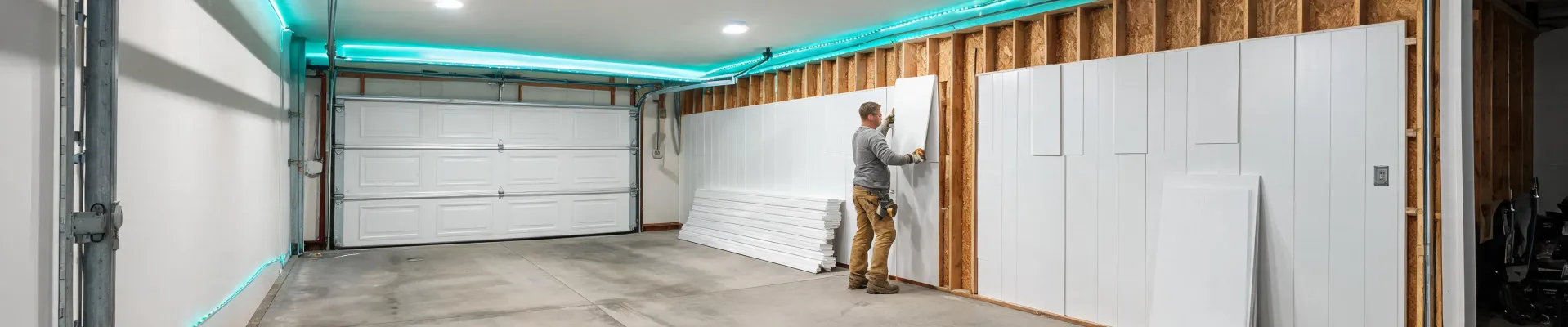
If I'd started from the use case—a wall surface that could be wiped down repeatedly—I might have considered a washable wall panel earlier. Trusscore wall and ceiling board fits into that category, though not for every wall. I didn't know the category yet.
The Acoustic Wall Panels Sourcing Disaster
What hurt more was the acoustic wall panels sourcing part. The project needed acoustic panels in a training room that sat beside a conference room. The PM asked me to 'find acoustic wall panels.' I searched, compared prices, and ordered a product with a promotional brochure that said 'Class A.' It was a low-bid quote from a supplier I hadn't worked with before.
Everyone on the jobsite said, 'Check the spec sheet before you buy.' I did not. I only believed that advice after skipping it once and paying for the consequences.
Fast-forward to inspection day. The building inspector asked for the acoustic wall panels compliance requirements: flame spread index, smoke-developed index, and acoustical test data. The supplier's rep said, 'It's Class A, don't worry.' But 'don't worry' is not a submittal document.
According to the International Code Council (iccsafe.org), interior finish requirements in the IBC are based on flame spread and smoke development. For a typical commercial interior, Class A means a flame spread index of 0 to 25 and a smoke-developed index of 0 to 450, tested per ASTM E84. The authority having jurisdiction gets the final say.
The low-bid product came from a manufacturer that had marketing claims but no third-party report. The city rejected it. We tore out $3,600 of panels, paid about $1,300 in labor to replace them, and lost five days. I wish I had tracked the total soft cost. I'm not 100% sure of the final number, but it was more than the material alone. (note to self: track soft costs too.)
We didn't have a formal compliance-check process before that order. That's not an excuse—it's a failure.
The Trusscore Wall and Ceiling Board Discovery
The silver lining came from a drywall foreman who asked me to look at Trusscore for a maintenance room. He said, 'It's not acoustic. It's a PVC wall and ceiling board for washable areas.' I appreciated that he said what it was not.
I looked up Trusscore wall and ceiling board. The page included install guides, fastening patterns, trim options, and line-item pricing. It didn't pretend to be something else. That transparency is rare in building materials.
We used Trusscore panels in a maintenance room and a small restroom ceiling. I won't quote current pricing here. I will say the total cost was easier to calculate before ordering. Clips, trim, and fastening spacing were in the documentation. I didn't have to imagine the hidden line items.
To be clear, Trusscore panels are not acoustic panels. If you need NRC or STC ratings, buy a product designed for acoustics. But if you need a durable, washable wall and ceiling board, that's a different conversation—and one I'm now better at having.
The Checklist That Came Out of the Chaos
The day after the inspection rejection, I built a one-page pre-order checklist. I still use it. It has caught, by my rough count, nine potential problems since.
- Name the product category before you name the supplier. A commercial wallpaper supplier is not a wall panel manufacturer. An acoustic panel company is not a ceiling board company.
- Write down the physical and regulatory demands. Moisture, impact, acoustics, fire rating, emissions. If the project doesn't demand it, don't assume it.
- Ask for the compliance package before the order. For acoustic wall panels compliance requirements, that usually means ASTM E84 test data, NRC (and sometimes STC), and possibly emissions documentation. Send it to your local code official for verification.
- Ask 'what's not included?' Before the price, before the delivery date. Ask until the quote sounds complete.
- Get it in writing. The product rep may be nice. The product rep's memory is not an acceptable submittal.
That last one came directly from my mistakes. I used to think 'transparent pricing' was a marketing slogan. Now I see it as a risk-management tool. The more a supplier can define up front, the less risk gets pushed to the end of the job.
The vendor who lists all fees upfront—even if the total looks higher—usually costs less in the end.
In my opinion, that's true for every material, not just wall panels.
What I'd Do Differently
It took me three years and about 120 material orders to understand that the spec sheet is not a formality. The spec sheet is the product.
If I could go back to that renovation, I'd do three things:
- Start with the use case, not the brochure. 'Commercial wallpaper' should have been 'scrubbable wall surface in a corridor.' 'Acoustic panels' should have been 'Class A acoustic panels with third-party test data.'
- Ask every supplier for the compliance file before I ask for pricing. If they can't provide it, I don't need a quote.
- Get Trusscore wall and ceiling board into the conversation earlier for the washable areas. It wouldn't have solved the acoustic issue, but it would have solved the material mismatch.
Now when someone asks me to source wall or ceiling panels, I don't just find a board. I find a product with a spec sheet that matches the room, a supplier that answers 'what's not included,' and a compliance file that will survive an inspector. That's the real product.
Regulatory information in this article is from my experience and for general guidance only. Verify current requirements with the authority having jurisdiction and the manufacturer. Prices listed are from one 2022 project and are not a current quote.