-
The comparison no one sends you: installed cost, not sticker price
-
What kind of wall are you really building?
-
Total installed cost: the line item that changes everything
-
Durability and maintenance: where the cheap wallcovering becomes expensive
-
Acoustic wall panels: when the lower price isn't the better buy
-
Trusscore garage panels: buy a system, not a sheet good
-
How to choose PVC wall panels for wholesale without hidden surprises
-
So which wall system should you choose?
The comparison no one sends you: installed cost, not sticker price
I've been managing commercial procurement budgets for years, and I'm still surprised by how often wall finishes are chosen based on the base quote price. I've done it too. That mistake usually shows up later.
In 2025, I estimated a 3,500-square-foot interior renovation where the realistic options came down to Trusscore PVC panels, commercial wallpaper, and acoustic wall panels. The wallpaper quote wasn't the obvious winner after installation, maintenance, and future replacement were included. That surprised me, and it changed how I buy wall products.
This is a transparent comparison of those three categories for people who care about total cost of ownership. I'm a cost controller by habit. I'm not here to tell you any one wall system is universally perfect.
What kind of wall are you really building?
Before the math, get clear on function. Commercial wallpaper is a surface treatment. PVC wall panels like Trusscore are a rigid, cleanable finish system. Acoustic panels are a sound-control tool. They all appear in wall product conversations, but they answer different questions.
- Commercial wallpaper: low-profile design change on dry interior walls.
- PVC wall panels: washable, rigid surfaces for garages, shops, food prep, restrooms, and back-of-house spaces.
- Acoustic wall panels: absorb reflected sound in rooms that need noise reduction or speech clarity.
If you skip this first filter, you'll compare products that shouldn't compete.
Total installed cost: the line item that changes everything
Let's talk about money. I'm not publishing a national price index; labor and freight vary too much. But from quotes I gathered in late 2025, one pattern was consistent:
Commercial wallpaper often had the lowest material price per square foot. It rarely had the lowest installed cost once wall prep, primer, adhesive, labor, and time were included.
Wallpaper installers need a smooth painted or primed surface. If the old wall is damaged, that means extra skim coating, sanding, and waiting for coats to dry. Those are not decoration costs. They are wall costs.
Trusscore panels were more expensive as a raw material. But in the renovation I priced, panels were mounted over framing or furring, which skipped most of the wet work. The crew wasn't waiting for drywall mud to cure or wallpaper adhesive to flash. The installed total came out competitive with wallpaper, and the room was ready sooner.
Acoustic wall panels were the most expensive option in most of my comparisons. That made sense. An acoustic panel carries more engineering, testing, and performance data than a decorative wall finish. If you need echo control, that extra cost is the point. If you don't, it's overspending.
Durability and maintenance: where the cheap wallcovering becomes expensive
The surprise wasn't the dollar per square foot of commercial wallpaper. It was what happened after installation in a high-traffic area. Scuffs, moisture at the baseboard, a torn seam near a doorway.
Can commercial wallpaper be repaired? Yes. But a repair isn't a simple spot patch. You need a matching dye lot, careful seam work, and usually a full wall section to avoid visible differences.
PVC panel systems address this differently. One damaged Trusscore panel can be removed and replaced without redoing the entire wall. That doesn't mean the panels are indestructible, and anyone who says “never needs maintenance” is giving you sales talk. But the maintenance path is simpler, especially in garages and utility rooms where wear is expected.
Acoustic panels bring their own maintenance limits. Their acoustic performance is tied to the fabric and core. Heavy cleaning, high humidity, and impact can degrade them. I've seen projects where the lower three feet of wall was protected with PVC panels and acoustic panels were placed above. That's not a compromise. It's smart zone design.
Acoustic wall panels: when the lower price isn't the better buy
Here's an honest point for any acoustic wall panels distributor reading this: your product isn't competing with PVC wall panels in every room. It's competing with reflected sound.
A 1,200-square-foot gym with hard panel walls and rubber flooring is going to echo. Trusscore panels won't fix that. Acoustic panels can. Conversely, a wash bay with pressure hoses is a poor place for most acoustic wall panels because of moisture and cleaning chemicals. A rigid PVC panel is the more logical call.
The vendors I trust are the ones who ask questions before quoting. When a supplier says, “In your conditions, I wouldn't sell you that,” they're not losing a deal. They're building trust. That's the supplier I remember at budget review time.
Trusscore garage panels: buy a system, not a sheet good
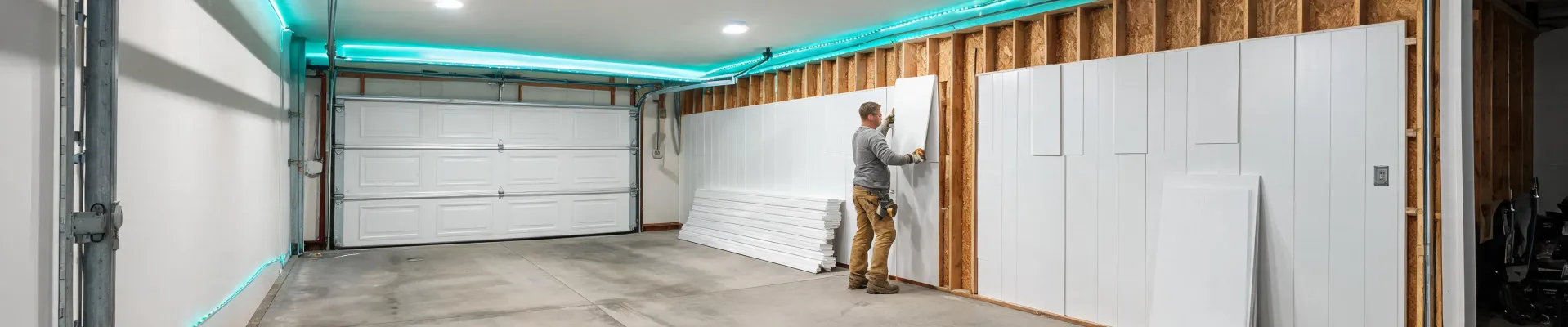
If you've looked up “trusscore garage,” you probably already know that the base panel is only part of the job.
Garage walls are rarely perfect. You deal with exposed studs, electrical boxes, utility lines, and corners. What makes a Trusscore garage wall functional is the complete system: panels, trim, fasteners, and a method that lets a contractor work around openings without custom-fabricating every detail.
When I compare garage wall panels, I check trim and edge details before I focus on the panel price. I'd rather buy a system that takes an extra afternoon to install than one that saves $0.20 per square foot but needs a special-order corner piece for every change of direction. Those special orders add up fast and usually arrive late.
How to choose PVC wall panels for wholesale without hidden surprises
If you buy PVC wall panels regularly, supplier terms matter more than any single price.
I once compared two PVC panel quotes that looked identical on the surface. One was about 9% higher per panel. The higher quote included packaging and delivery to our receiving area. The other quote did not. After freight, packaging, and the labor time spent sorting out the delivery, the “cheaper” panel became the expensive one.
Since then, I ask for a line-item breakdown before I judge a quote:
- Is this price for a specific panel thickness, width, and finish?
- Which trim profiles are included in the price, and which are extras?
- How is the order packaged and delivered?
- What are the minimum order quantity and lead time?
- What fastening method does the panel require on my substrate?
Transparent pricing isn't about printing the lowest possible number. It's about showing the real number before the order. Buyers can accept a higher total when it's the actual total. We don't accept last-minute add-ons.
So which wall system should you choose?
Let me end with scenario-based advice, not a one-word verdict.
Choose a PVC wall panel system like Trusscore when the space needs a cleanable, rigid, moisture-tolerant surface: garage walls, workshops, food service areas, restrooms, corridors with cart traffic, or high-wear walls that need a straightforward replacement path.
Choose commercial wallpaper when the wall is dry, smooth, and the design brief is about pattern and color. It's a legitimate choice, not an inferior one. It just has a shorter useful life in rough environments.
Choose acoustic wall panels when the real problem is noise. Buy based on acoustic data, and protect the panels in spaces where moisture or impacts will occur.
Bottom line: compare total installed cost, maintenance paths, and the function you're buying. And when a supplier shows you a price that looks too neat, ask what's not included. Sometimes the right answer is a different product, not a lower price.