You have a 6,000 sq ft corridor to finish and a budget that isn't getting bigger. You search for a commercial wallpaper wholesale cost guide, see a material price around $1.00 per square foot, and think the decision is done. Then the first real bid comes in and it's not close to the brochure.
I'm a wall panel supply specialist for commercial contractors. I've handled 200+ rush orders in 8 years, including same-day turnarounds for property managers who called me from the middle of a lobby that was supposed to open at 4pm. This guide comes from that vantage point, not from a manufacturer's spec sheet.
The surface problem: you're comparing sticker prices
The surface problem is simple. Commercial wallpaper looks cheap because the material is cheap. Bulk PVC wall panels look expensive because the material costs more than wallpaper. Most buyers stop there.
Here's the thing: the question isn't 'what does the material cost per square foot?' The question is, 'what does the finished wall cost over the next five years?'
Why does that matter? Because the wall will be touched, cleaned, bumped, and occasionally abused. And every one of those events costs money.
Why commercial wallpaper's real cost is hidden
Commercial wallpaper is not residential wallpaper. Most commercial wallcovering is a vinyl-based sheet designed to be scrubbed. But the material is only a small part of the installed system.
Before one roll goes up, the substrate has to be smooth. A typical painted drywall wall often isn't flat enough for a heavy vinyl wallcovering in a hallway. Light will find every lump, taped seam, and sanding skip. So you add skim coating, sanding, priming, and possibly tear-off of the old wallcovering. That's labor, and labor isn't a line item you can guess.
Ask three contractors to quote a commercial wallcovering install and you'll get three different numbers because each assumes a different amount of surface prep. That's not price gouging. That's a material that carries hidden prep requirements.
The cleanability trap
Commercial wallpaper is cleanable until a seam catches a cart. In a school hallway or hospital corridor, a seam is the weak point. Once the top layer is nicked, moisture can get behind the facing and the peeling begins. You can patch it. You'll see the patch.
PVC panels don't have that failure mode in the same way. That doesn't mean they're unbreakable or maintenance-free. It means the failure points are different: panels can be replaced one at a time, and there aren't seams every 27 inches that act as entry points for moisture.
The replacement clock
Commercial wallcovering usually comes with a stated lifespan. In practice, high-traffic spaces start showing seam issues sooner. How much sooner? That's where I don't have hard data for every building. What I can say anecdotally is that we've replaced a lot of so-called seven-year wallcovering in year four.
The real price of 'cheaper' material
Cheap material isn't the problem. Unplanned replacement is the problem.
In March 2024, a property manager called on a Tuesday. A leak in a hotel lobby had bubbled three sections of commercial wallpaper. The original spec had chosen wallpaper because it won the installed bid by about $800. The replacement job—matching the dye lot, removing only the damaged sections, re-prepping that area, and scheduling access around guest check-in—ended up just under $9,000. I want to say $8,700, but don't quote me on that. The client's alternative was to live with a mismatched wall in a public space or close the lobby for two days. There was no 'just wallpaper' fix.
The upside of the original decision was $800. The risk was a callback in 18 months. I kept asking myself: is $800 worth potentially losing a wall? That math happens every day in commercial construction.
Could PVC panels have been damaged by the same leak? Yes. But the repair process would have been different: remove damaged panels, install new panels, hide fasteners with trim. No matching dye lots. No wet tearing. No weekend shutdowns. That doesn't mean PVC panels are indestructible. It means the repair path is more predictable.
I don't have hard data on industry-wide wallcovering failure rates. Based on our 200+ rush jobs, though, my sense is that a meaningful share of emergency wall replacement calls are failures that weren't supposed to happen for years. I wish I had tracked that metric more carefully from the start.
And the hidden cost isn't just the replacement. It's downtime. An occupied commercial space loses money every hour a wall is wet or blocked off. That's not in the material bid. That's what gets buried.
What changes the math for bulk PVC wall panels
This is where I stop being an emergency specialist and start being a specifier. Trusscore panels are not the cheapest wall panel option. They don't try to be. The 'wallpaper is always cheaper' thinking comes from an era when PVC panels were industrial-looking and hard to detail. That's changed. The reason contractors look at Trusscore panels is that the system is built around installation speed and easier future repairs.
Trusscore PVC panels price: looking past the list price
Let's talk about Trusscore PVC panels price, because that's the part people get wrong. Based on distributor price sheets and project purchase orders I've seen in late 2025 and early 2026, bulk PVC wall panels—including Trusscore—typically show up at a material cost between $2.00 and $4.00 per square foot depending on panel profile, length, finish, and quantity. That's a ballpark, not a quote. Verify current pricing with your distributor because this market changes.
At 10,000 sq ft, the math is different from 1,000 sq ft. Bulk PVC wall panels become more attractive when you can buy a full quantity, choose a standard finish, and keep the same trim profile throughout the building.
Why installed cost beats material cost
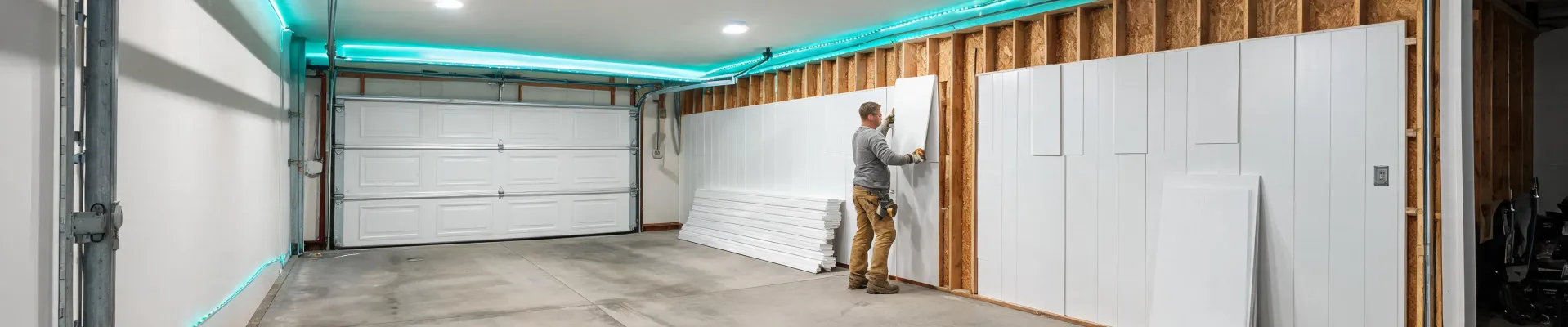
Trusscore's tongue-and-groove system uses standard tools. Panels mount on strapping or studs. There's no drywall skim coat, no wallpaper paste, no waiting for layers of primer to cure. That's not 'cheap labor'; it's fewer trades and fewer days.
I need to be careful here. A painted wall can be equally fine if the spec is simple. And PVC panels aren't right for every design aesthetic. But if the goal is a cleanable, impact-resistant wall in a high-traffic corridor, the installed cost of a Trusscore system is often closer to wallpaper than the material prices suggest. At least, that's been my experience with commercial projects in North America. If you're working on ultra-luxury hospitality or a short-term retail fit-out, your decision matrix may be completely different.
Look, I'm not saying wallpaper is bad. I'm saying the material cost is the least trustworthy number in the conversation.
The short version
If you want a one-page rule, here it is:
- Get installed costs, not material costs. Include prep and removal.
- Ask how much it costs to replace one damaged section in year three.
- Use wallpaper for short-term, low-touch spaces. Use bulk PVC wall panels where carts, moisture, and maintenance are part of daily life.
- Verify current Trusscore panel pricing with an actual distributor. This guide is a starting point, not a quote.
That's it. Done.
An informed customer asks better questions. If this guide helps you ask one question about the wall that's supposed to last, I'll take that.