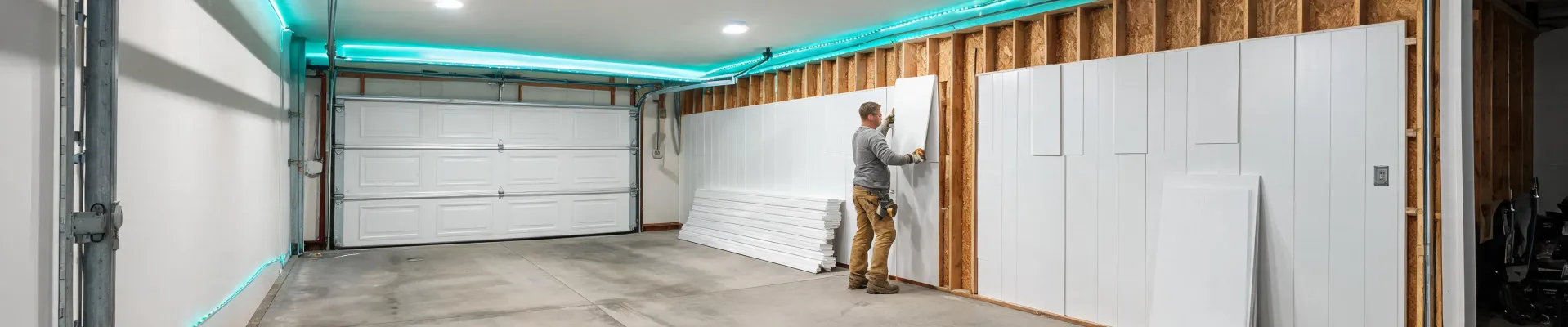
When you source PVC wall and ceiling panels, you'll meet two kinds of suppliers.
Type A hands you a completed specification sheet before you ask. Thickness tolerance, impact resistance, test methods for fire performance—the numbers are there in writing, and they're consistent from one batch to the next.
Type B gives you a price and a verbal promise. "High quality." "We've been in this business a long time." When you press for specific numbers, the conversation gets kind of fuzzy.
I review building product specifications for a living. As a quality compliance manager, I evaluate roughly 200 product spec sheets a year before they're approved for customer projects. I've rejected about 12% of first-round submissions in 2025 because the product couldn't back up its own documentation. That experience shapes this comparison.
If you're evaluating Trusscore panels or any other PVC wall panel brand, here's the framework I use. It compares suppliers on three dimensions: specification transparency, total cost of ownership, and accountability after the sale.
1. Specification Transparency
From the outside, a supplier who talks confidently about their product sounds like a safe choice. The reality is that confidence and data are two different things.
Type A suppliers document everything. For a product like Trusscore's wall and ceiling system, the technical documentation covers material composition, panel dimensions, surface finish, span ratings for ceiling applications, and performance data generated using recognized test standards. Whether it's Trusscore or another spec-first brand, the point is the same: the numbers exist, and the supplier shares them without being dragged into it.
Type B suppliers rely on adjectives. "Professional grade." "Heavy duty." Those words don't correspond to any measurable standard. When you ask which test method produced those claims, you often get a shrug.
The question most buyers ask first is "Can I see a sample?" That's a reasonable question. The question they should ask is "Can I see the test reports?" Samples only prove the product looked good on one day. Test reports prove it performs consistently.
Here's what that looks like in practice. In our Q1 2024 quality audit, we evaluated over a dozen PVC panel suppliers for potential inclusion in an approved vendor list. Six of them couldn't provide impact resistance data for their own panels. Three admitted they hadn't run any third-party tests. None of those made the list.
My takeaway after years of this work: a specification sheet is a contractual promise. If a supplier won't put their product's performance in writing, they don't want to be held to a standard. That, by itself, tells you everything.
2. Total Cost of Ownership
The conventional wisdom in construction sourcing is to compare unit prices. Everything I'd read about PVC wall panels suggested that budget options would perform "well enough" and that paying more was just buying a name. In practice, I've found the opposite: the price difference between spec-first and quote-first suppliers is often smaller than the cost difference created by inconsistent quality.
Let's run a realistic comparison for a 10,000-square-foot wall installation.
A spec-first product might cost more per square foot—let's say $2.45 versus $1.80 for a quote-first panel. That's a $6,500 difference on paper. But the quote-first option carries costs that don't show up in the quote:
- Additional material waste (7–8% more panels because of damaged pieces and sorting through inconsistent batches): around $1,260
- Extra installation labor to adjust for panels that don't align cleanly: $1,500–$2,400
- Potential callback risk if panels warp, discolor, or separate after installation: $2,000–$5,000
Add it up, and the "savings" from the lower unit price evaporates pretty quickly. (I've watched this math play out in real projects more times than I can count—and it never favors the quote-first option.)
People assume the lowest quote means the supplier is more efficient. What they don't see is which costs are being deferred to the installer and the general contractor. The per-unit price is real. But so are the costs of sorting, waste, rework, and callbacks.
I should add that this scales. On a 50,000-square-foot retail project, the difference between 6% waste and 12% waste is 3,000 square feet of extra panels. That's not just material cost. That's a week of additional labor and a schedule that slips.
The conclusion here: compare the full project cost, not the per-unit price. The lowest quote is frequently the most expensive panel you'll ever install.
3. Accountability After the Sale
The third comparison only surfaces when something goes wrong. But something always goes wrong eventually—a damaged batch, a color mismatch, a panel that doesn't sit flush.
Type A suppliers respond to problems within a documented framework. They provide batch traceability, written warranty terms, and a technical contact who understands their own specification. When you call about a discrepancy, you reference the spec sheet and agree on what happened.
Type B suppliers respond with reassurance. "We've never seen this before." "It must have happened in transit." Maybe that's true. But without a documented standard, there's nothing to measure the problem against.
In 2022, a contractor friend ran into the exact scenario. He'd ordered PVC panels for a 4,000-square-foot retail fit-out. The first delivery looked great. The second delivery—same product, same order—was visibly different. Color shift. Panels that didn't sit flush. When he called, the supplier said the dye lot had changed and
"it's still within industry standard."No tolerance had been documented upfront. There was no baseline to dispute. He spent $3,200 on rework and adjusted his installation schedule to make it work.
I'm not 100% sure how many stories like that I've heard over the years. Dozens, at least. The pattern is the same every time: the vaguer the specification, the harder the dispute.
Here's the accountability conclusion: buy from suppliers who write down their commitments. If a supplier won't document its promises before the sale, it likely won't honor them after the sale either.
Which One Fits Your Project?
You'd think after all that, I'd tell you to always work with Type A. But the honest answer is: it depends on the project.
Choose a spec-first supplier like Trusscore when:
- Your project requires documented performance for code compliance or permit approval.
- Your schedule is locked, and you can't absorb delays from reorders or rework.
- You're installing wall or ceiling panels across multiple rooms or phases and need color consistency.
- You're a contractor or distributor who will be answering warranty questions from your own clients.
- Your project is larger than a few hundred square feet, where total cost math starts to matter more than unit price.
Consider a quote-first supplier only when:
- You're handling a small DIY project and can inspect every panel personally before installation.
- You have enough experience to work around inconsistent edges and slight color variation.
- The panels will be covered by a second finish layer and never seen.
- You've already budgeted generously for waste and schedule overruns.
And even then: get everything in writing. "We stand behind our product" means nothing in a phone call. It means slightly more in a written warranty. It means the most when it's part of a contract that references a specification sheet.
The Bottom Line
The PVC wall panel market looks crowded, and most products photograph well. The practical differences are hidden in the details: specification transparency, total cost of ownership, and what happens when something goes wrong.
You don't need a materials science degree to source wall panels well. You need a framework and a habit of asking for documentation.
Start with the specification sheet. If it exists and the numbers hold up, you've found a supplier worth talking to. If it doesn't exist—well, at least you found out before you spent a dollar.