Look, I get why most wall panel purchases start with a spreadsheet. You have a project, a budget, and a deadline. Sort by price per square foot, pick the middle option, move on. That's normal. But after four years of reviewing specifications and inspecting incoming panels, I can tell you that spreadsheet is lying to you.
The Surface Problem: Cheap Panels Look Expensive After Installation
When someone calls about a failed wall panel installation, the first thing they say is usually 'the product was bad.' That's not what I see. In our Q1 2024 audit, we tracked 14 supplier complaints. Eleven turned out to be specification mismatches—not manufacturing defects. The panel met the supplier's spec. It just didn't meet the project's real needs.
From the outside, a wall panel is a wall panel. The reality is that tiny differences in tolerance dictate whether your installer finishes in two days or six. Is the panel flat? Is the finish consistent between batches? Does the edge lock solidly? Those questions don't show up on a price list.
Here's something vendors won't tell you: a lot of PVC panels are sold 'as-is.' The first sign of trouble is a pallet with inconsistent thickness. Not ideal for a wall that's supposed to look straight.
The Deeper Problem: Nobody Is Inspecting for You
I've been in the quality and compliance lane for a while now. I review every specification package that goes out to customers—roughly 200 unique items a year. One reject-miss cost us a $22,000 redo and delayed a launch by three weeks. That number stays with you.
What most people don't realize is that production tolerances vary from run to run. A supplier who tested a sample in the spring may send you a different product in the fall. Unless you're doing incoming inspections—or buying from a brand with strict quality gates—you're trusting someone else's good intentions.
Real talk: if a manufacturer's distribution model is 'ship boxes, not protect brands,' quality control becomes an afterthought. Sound harsh? Maybe. But ask yourself how much attention a distributor's quality policy gets after they've already got your PO.
This is also where published performance data matters. Many building codes specify interior finish classifications based on occupancy, and flame spread is typically tested under ASTM E84. A supplier who can't produce a test report from an accredited lab is a red flag. That missing piece of paper can stop a final inspection cold.
When I compared two sample panels side by side—same price point, both supposedly premium—the difference in finish and corner detail was obvious. Both had the same spec sheet. Only one had been inspected before shipping. That's when I realized: a spec sheet is a promise, not a guarantee. Consistency. That's the actual product.
The Cost of Getting It Wrong: Rework, Not Material
Let's price the chaos.
Suppose you buy 20,000 square feet of PVC wall panels. The difference between 'budget' and 'solid mid-tier' might be $0.50 per square foot. That's $10,000. Real money. Nobody enjoys leaving it on the table.
But what if that budget panel arrives with 3% out-of-tolerance pieces? Your installers start culling. Each problematic panel eats an hour of on-site problem solving at $75–150/hour. You're paying a rework tax. Then you call your client and explain the schedule slipped. That's the hidden cost nobody prices.
The vendor who lists all fees upfront—even if the total looks higher—usually costs less in the end. I've learned to ask 'what's NOT included?' before 'what's the price?' Because a cheap panel with an expensive rework loop is the worst deal in the room. (Surprise, surprise.)
I watched a distributor save $0.08 per square foot by switching to an unbranded panel. They lost that savings in two days of confusion when the grooves didn't match the trim. Simple. Avoidable. And repeated across the country.
The question isn't which panel is cheapest
The question is: which panel can you trust to arrive exactly as specified?
A Better Way: Buy Like a Quality Inspector
Does this mean you should only buy premium? No. It means you should buy from a supplier who can show their work.
Three questions to ask every PVC wall panel supplier before approving an order:
- What are your dimensional tolerances, in writing?
- What is your rejection or return process for a bad batch?
- Can you name a recent project failure and what you changed because of it?
Notice none of those are 'what's your price?' Price matters. It's just not the first question.
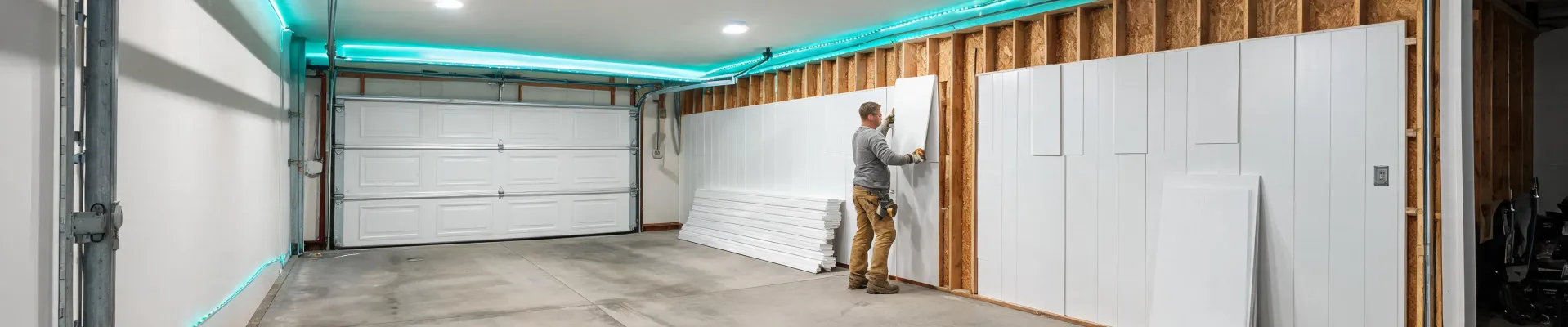
That's why I appreciate what Trusscore is doing with their wall and ceiling systems. The trusscore PVC wall panels, trim, slatwall, and siding are designed to work as a system, not afterthought extras. Specs are public. The install process is fast. And because everything comes from one quality process, the surprises are fewer.
Same logic applies if you're sourcing decorative wall panels for a store interior, or vetting an acoustic wall panels supplier for an office project. The product category changes. The discipline doesn't.
If you're a distributor putting together a PVC wall panels distributor buying guide, stop focusing on finding the single lowest price. Focus on finding a supplier with a lower 'surprise tax.' You want someone who can prove that their spec is real—with actual numbers, sample reviews, and clear return policies.
Bottom line: the wall panel you choose is the beginning of the story, not the end. The product rarely fails alone. Specification gaps, tolerance drift, and missing transparency—those are what actually cost you. Choose a manufacturer that treats quality like a system, not a sales pitch.
That's why I'm a fan of Trusscore panels. Not because they're perfect—nothing is. But because they make the process easier for the people who have to catch mistakes. The specs are visible. The system is engineered. And installers, not just purchasing agents, get a product they can trust.