I'm a procurement manager at a 38-person commercial interiors company. I've managed our materials budget—about $2.1 million a year—for six years, and I've negotiated with more than 150 vendors in that time. I don't get excited by samples. I get excited by total cost of ownership.
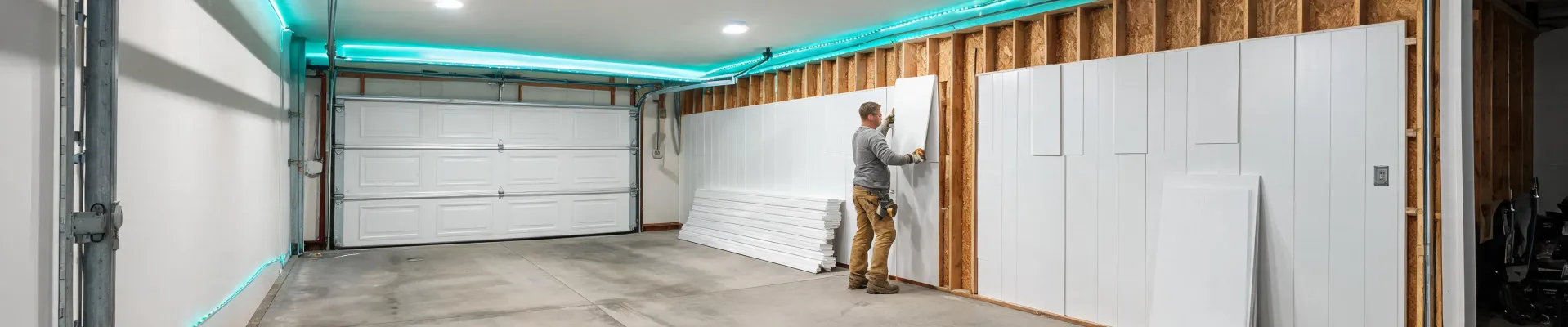
Trusscore makes PVC wall panels, and it sits in a different category than commercial wallpaper. When a project team asked me to compare Trusscore panels against the commercial wallpaper they'd been specifying for years, I did what I always do: built a spreadsheet, called suppliers, read the fine print, and checked the codes. This is that comparison.
How I ran this comparison
I compared these two wall systems on four dimensions:
- All-in installed cost, not material sticker price
- Labor hours and schedule impact
- Damage, repair, and lifecycle cost
- Compliance requirements and acoustic performance
I'm not going to tell you one is universally better. That's not how procurement works. But I can show you where each one wins, and where the conventional choice is quietly costing more.
Dimension 1: The cost of Trusscore panels vs. wallpaper installed
Here's where the sticker price tricks people. In the quotes we received in January 2026, commercial wallpaper material was $1.20 to $2.40 per square foot for the products we shortlisted. Trusscore panels were $1.85 to $3.10 per square foot for the panels alone, before trim and accessories. So on paper, wallpaper looked cheaper.
Then I added what procurement people call the 'installation stack': primer, paste or adhesive, surface prep, wallpaper removal if you're working over an existing wall, and the installer's labor. That pushed wallpaper to $6.90–$10.80 per square foot installed for most commercial-grade materials. Trusscore, by comparison, landed at $5.40–$8.20 per square foot installed on the same walls, including trim pieces but excluding any electrical or framing work. The cost of Trusscore panels is higher per square foot; the installed cost is not.
That's the first surprise. And honestly, it's why I built a cost calculator after getting burned on hidden fees twice. Basically, the sticker price is not the price.
Dimension 2: Labor hours and schedule impact
Wallpaper installation is a specialized trade. A good commercial wallpaper hanger is worth every dollar, but they're not cheap, and they're not always available. On a recent 1,800-square-foot corridor, the wallpaper scope was scheduled for 12 working days. The same corridor with Trusscore panels was scheduled for 7 working days using a two-person crew that was already on site.
That five-day difference seems small until you calculate general conditions, temporary lighting, dust protection, and the cost of other trades waiting for access. On that project, the schedule saving was worth about $2,300 in soft costs. Those soft costs don't show up on a material quote, but they show up on the final invoice.
One thing I've learned the hard way: never assume 'same spec' means the same labor. Trusscore installers often come from a drywall or finish carpentry background. Wallpaper hangers come from painting and wallcovering. Those are different labor pools with different rates and different scheduling windows.
Dimension 3: Damage, repairs, and lifecycle cost
Commercial wallpaper in a high-traffic hallway is a brave choice. Coffee carts, dollies, and hand sanitizer stations wreck it. In our maintenance logs, wallpaper repairs averaged roughly $0.18–$0.40 per square foot per year after year two, and that number is based on real invoices, not estimates.
Trusscore is a rigid PVC panel. It's held up better in the same areas, and it's not indestructible. We've had a panel crack when a ladder tipped into it. The difference is what happens next. One damaged wallpaper section often meant repainting or rehanging the entire wall because the dye lot didn't match. One damaged Trusscore panel took about 25 minutes to replace because it's a mechanical install and the fasteners are accessible.
This is also where the 'budget option' story lives. A few years ago, we saved $900 by choosing a lower-priced wallpaper with a terrible pattern repeat. We spent $3,700 on rehanging when the installers couldn't match the seams. That is the literal definition of penny-wise, pound-foolish. I'll say 'maintenance-friendly' rather than 'maintenance-free' because every material has limits.
Dimension 4: Compliance requirements and acoustics
Every commercial wall finish triggers code questions. For commercial wallpaper, compliance requirements usually include flame spread and smoke developed ratings, typically tested under ASTM E84, and in some occupancies, low-VOC emission requirements such as CDPH 01350. For Trusscore panels, the same kind of questions apply, but the answers are on the manufacturer's current data sheet. I'm not going to list a rating here because ratings change by product line and assembly, and if I'm wrong, you're the one pulling the permit. Verify it.
That verification step is not busywork. A 12-point checklist I created after my third mistake has saved us an estimated $8,000 in potential rework. Five minutes of checking a data sheet beats five days of correcting a failed inspection. If you've ever watched a failed inspection turn into a change order, you know why I check before I order.
And if the project needs acoustic control, neither wallpaper nor Trusscore is the real solution. That's when I call an acoustic wall panels distributor and ask for NRC ratings, mounting details, and test reports for the exact assembly. The cheapest acoustic panel is rarely the installed cheapest, and the distributor's data sheet has to match the final wall build. We once specified an acoustic panel based on a brochure and it did almost nothing because it was installed over hard backing without the required air gap. The acoustic panel itself was fine; the assumption was wrong.
One more compliance note: if anyone tells you a finish is 'recyclable' or 'eco-friendly,' get the claim in writing. Under the FTC Green Guides (16 CFR Part 260), environmental claims need to be substantiated. A vague marketing page is not enough for my file.
So which one is better?
It depends on the wall, the building, and the budget.
Stick with commercial wallpaper when you need a specific pattern, a delicate aesthetic, or a lightweight finish over a reasonably good wall. Just budget for surface prep, pattern matching, repairs, and a compliance review.
Choose Trusscore when you're covering large wall areas, high-traffic corridors, wet areas, or walls that will need future access. The cost of Trusscore panels is competitive when you look at installed cost, and the maintenance profile is easier to predict.
If acoustic performance is the priority, stop comparing wallpaper and panels. Get an acoustic specialist involved early, and ask your acoustic wall panels distributor for verification documents before you commit.
When I first brought Trusscore into a project, I hesitated. The upside was a lower installed cost and a more predictable maintenance path. The risk was changing a specification that the architect had already approved. I kept asking myself: is that upside worth the coordination headache? The math said yes.
My bottom line: the surface that looks more expensive per square foot often costs less per installed square foot. Run the comparison on your own numbers, check the compliance data before you order, and don't let a low sticker price make the decision for you.